Every spring, the word Easter appears on shop windows, greeting cards, and church notices, but where does word Easter come from? The answer is more interesting than most people expect, because the name has travelled through ancient languages, early Christian history, and old English traditions before reaching us. Unlike Christmas, whose name clearly points to Christ, Easter has a history that scholars still debate, with several competing explanations. This guide explores the leading theories, traces the word through Old English and Germanic languages, and explains how the same festival came to be called Pascha in many other languages, giving you a clear, balanced picture of a word with more than a thousand years of history.
The question matters because Easter is one of the oldest and most important festivals in the Christian calendar, celebrating the resurrection of Jesus. Yet its English and German names do not come directly from the Hebrew or Greek words for Passover, as they do in French, Spanish, Italian, and many other languages. Instead, English and German use a word with Germanic roots, and understanding why tells us a great deal about how early Christianity spread through northern Europe, how local customs were woven into the new faith, and how language preserves history long after the original context has faded.
Where Does Word Easter Come From? The Bede Theory
The most famous explanation for where does word Easter come from comes from the Venerable Bede, an English monk and scholar who wrote in the early eighth century. In his work on the reckoning of time, Bede wrote that the English month of Eosturmonath, roughly corresponding to April, was named after a goddess called Eostre, and that the Christian festival falling in that month took her name. According to Bede, feasts once held in honour of Eostre were replaced by the Christian celebration, but the old name for the season remained attached to the festival.
Bede’s account is the foundation of the most widely repeated story about Easter, but it comes with an important caveat: Bede is the only early source to mention a goddess named Eostre. No earlier inscription, poem, or temple record confirms her worship independently, which has led some modern scholars to suggest that Bede may have been inferring a goddess from the month name rather than recording a well-established cult. Others argue that the absence of evidence is unsurprising, given how little survives from Anglo-Saxon pagan religion. Either way, Bede’s explanation has shaped how English speakers have understood the word for over a thousand years, and it remains the starting point for any serious discussion of the name.
The Old English Roots of the Word Easter
Linguists can trace the word Easter back to Old English Eastre or Eostre, which is related to the word east, the direction of the rising sun. This connection to dawn and sunrise is significant. The reconstructed Germanic root is linked to the idea of dawn, shining, and the east, and a similar root appears in the Latin word aurora, meaning dawn, and in the Greek goddess of the dawn, Eos. In other words, even if the details of a goddess called Eostre are uncertain, the word itself belongs to a family of dawn words that stretch across the ancient Indo-European languages.
This dawn connection fits the season beautifully. Easter falls in spring, when days lengthen, the sun rises earlier, and the natural world returns to life after winter. A festival celebrating resurrection and new life, held at the turning point of spring, naturally attracted a name associated with dawn and the east. Whether the name came directly from a goddess, from the month, or from a general word for the dawn season, the symbolism is the same: light returning after darkness, life returning after winter. That layered meaning is part of why the word has endured so powerfully.
Easter and the Direction East
The link between Easter and east is not a coincidence of spelling. In early Christian worship, churches were traditionally built facing east, towards the rising sun, as a symbol of Christ and resurrection. Morning services at dawn were central to the Easter celebration, and the sunrise itself became a powerful image of the empty tomb and new life. When a word already associated with dawn and the east became the name of the spring festival, it carried all of these associations with it, reinforcing the festival’s meaning every time the word was spoken.
Easter Versus Pascha in Other Languages
One of the strongest clues about the word’s history is that most languages do not use anything like Easter at all. French uses Paques, Spanish uses Pascua, Italian uses Pasqua, and Greek uses Pascha, all derived from the Hebrew word Pesach, meaning Passover. This makes sense, because the events Easter commemorates took place during the Jewish Passover festival in Jerusalem, and the early church in the Mediterranean world naturally kept the Passover name. English and German are the great exceptions, using Easter and Ostern, which points to a specifically Germanic naming tradition in northern Europe.
The contrast tells a story about how Christianity spread. In the Mediterranean, the faith grew within a world already shaped by Greek and Hebrew language and by the Passover story. In Anglo-Saxon England and Germanic Europe, missionaries encountered local languages, months, and seasonal festivals, and the spring festival took a local name even as its Christian meaning remained the same. The result is that English speakers today use a Germanic word for a festival that most of the world names from Hebrew, a linguistic split that preserves the different paths the faith took across Europe. Word histories often reveal these hidden journeys, much like this exploration of the origin of a personal name shows how a single word can carry centuries of meaning.
Alternative Theories About Where Easter Comes From
Not all scholars accept Bede’s goddess explanation at face value, and several alternative theories have been proposed. One theory suggests that the Old English word Eostre originally referred not to a goddess but to the spring season itself, or to a festival of dawn held in the spring month, and that Bede personified a seasonal name into a goddess. Another theory connects the word to old Germanic words for dawn and the spring sunrise without any goddess at all. A third, less widely supported theory once proposed a link to the Latin phrase for the white week after Easter, but most linguists now favour the Germanic dawn root as the strongest explanation.
What all the serious theories agree on is the Germanic and dawn-related origin of the word. They differ on whether a goddess stood between the dawn root and the festival name, or whether the month and season carried the word directly. This honest uncertainty is worth noting, because popular articles sometimes present Bede’s goddess story as certain fact. The truth is richer: we know the word’s language family with confidence, we know Bede’s account is our earliest written explanation, and we know the goddess herself is not independently confirmed. Holding those three facts together gives a more accurate picture than any single simplified story.
How Easter Eggs and Bunnies Fit the Story
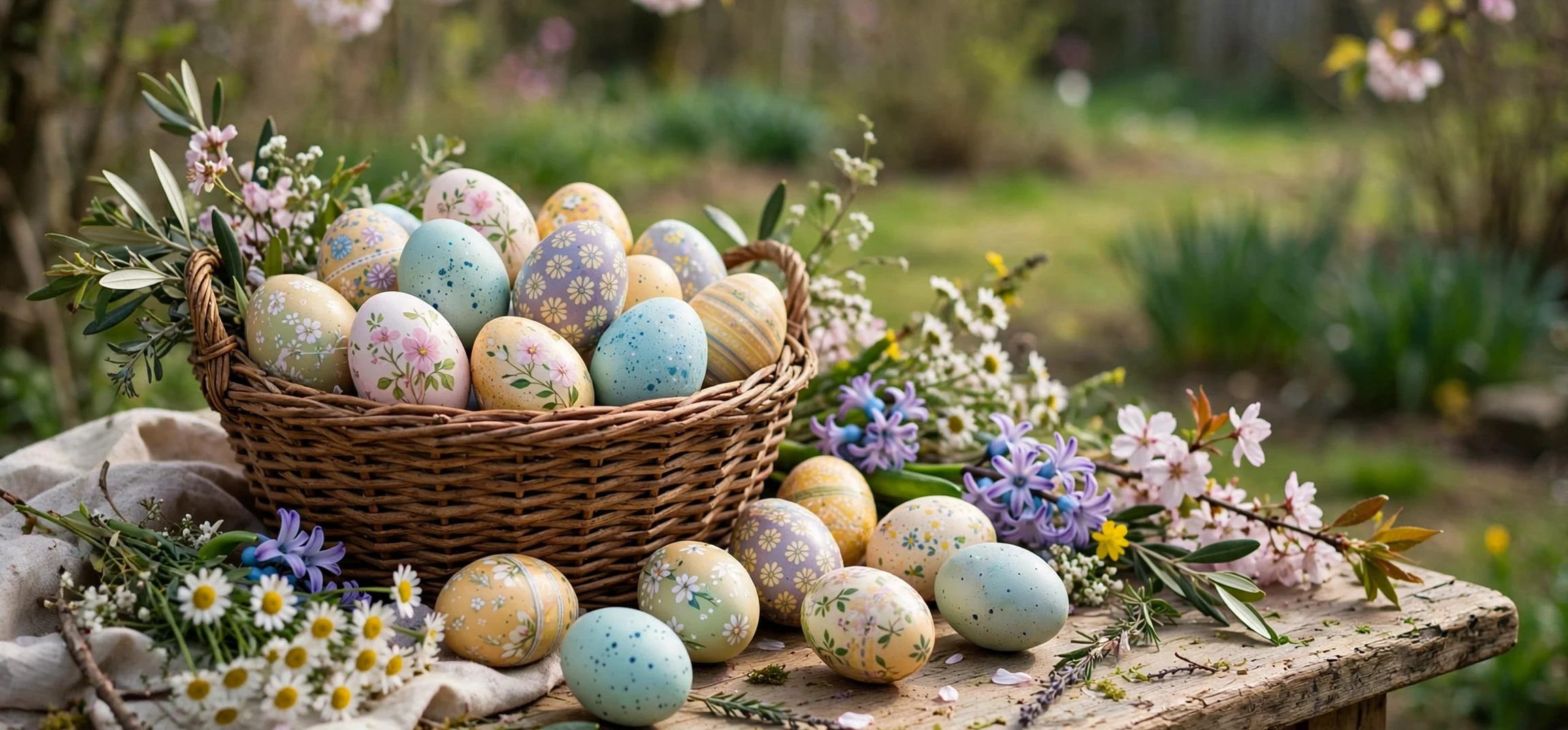
The Easter bunny and Easter eggs are often linked in popular retellings to the goddess Eostre, with claims that hares and eggs were her sacred symbols of fertility. These claims are charming, but they are much later folklore rather than documented Anglo-Saxon practice. Eggs have been a spring symbol across many cultures because they visibly contain new life, and eggs were also historically forbidden during Lent, making them a natural celebratory food when the fast ended. Decorating and giving eggs at Easter is documented from the medieval period onward across Christian Europe, regardless of what the festival was called.
The Easter hare, later the Easter bunny, appears in German folklore of the seventeenth century, where a hare was said to lay coloured eggs for good children. German immigrants carried the custom to America, where it became the Easter bunny familiar today. Hares are also famously fertile and active in spring, which made them a natural spring symbol, but there is no reliable evidence tying them directly to an Anglo-Saxon goddess. Separating documented history from later folklore makes the real story more, not less, interesting: it shows how spring symbols from many sources gathered around a festival whose very name already meant dawn and new beginnings.
| Language | Word for Easter | Root Meaning |
|---|---|---|
| English | Easter | Old English Eastre, linked to dawn and east |
| German | Ostern | Germanic dawn root, related to Easter |
| French | Paques | From Hebrew Pesach, Passover |
| Spanish | Pascua | From Hebrew Pesach, Passover |
| Greek | Pascha | From Hebrew Pesach, Passover |
| Italian | Pasqua | From Hebrew Pesach, Passover |
When the Word Easter Entered Common Use
By the time English literature flourished in the Middle Ages, Easter was firmly established as the name of the festival, appearing in sermons, calendars, and poetry. The word survived the Norman Conquest, the Reformation, and the standardisation of English spelling, while the festival itself continued to be calculated by a complex rule: the first Sunday after the first full moon following the spring equinox. This movable date is why Easter can fall anywhere from late March to late April, always in the season of lengthening days that its name evokes. The endurance of the word through a thousand years of political and religious change shows how deeply it had rooted itself in English life.
Today, the word Easter carries both religious and cultural meanings. For Christians, it remains the holiest festival of the year. For the wider culture, it also marks spring holidays, school breaks, chocolate eggs, and family gatherings. Both uses descend from the same history: a spring festival of new life, named in English from an old word for dawn. Whether you hear the word in a church service or see it on a shop display, you are hearing a piece of linguistic history that connects modern English to the Anglo-Saxon world. Names and their origins continue to fascinate for exactly this reason, as seen in this study of the origin of a family name and the stories surnames preserve.
Frequently Asked Questions About the Word Easter
Is Easter named after a goddess?
According to the eighth-century scholar Bede, yes: he wrote that the month and festival took the name of a goddess called Eostre. However, Bede is the only early source for this goddess, so modern scholars treat the claim as plausible but unproven, while the Germanic dawn root of the word is well established.
Why do other languages not use the word Easter?
Most languages name the festival from the Hebrew word Pesach, meaning Passover, because the events it commemorates happened during Passover. English and German are exceptions, using a Germanic dawn word that became attached to the festival in northern Europe.
Does Easter mean dawn?
The word is related to dawn rather than a direct translation of it. Its Old English form shares a root with words for east and dawn, including the Latin aurora and the Greek dawn goddess Eos, giving it a strong association with sunrise and new light.
Conclusion: Where Does Word Easter Come From?
So, where does word Easter come from? The best-supported answer is that it comes from an Old English word linked to dawn and the east, recorded by Bede as the name of a spring month and possibly a goddess, and passed down through Germanic language into modern English. While most of the world calls the festival by a name derived from Passover, English and German kept a local spring word that perfectly captured the season: light returning, days lengthening, and new life beginning. That thousand-year-old dawn word is still with us every spring, a reminder that the language we use every day carries history in every syllable. For another example of how a familiar word holds a long history, see this guide to the origin of a famous name and its journey through language.



