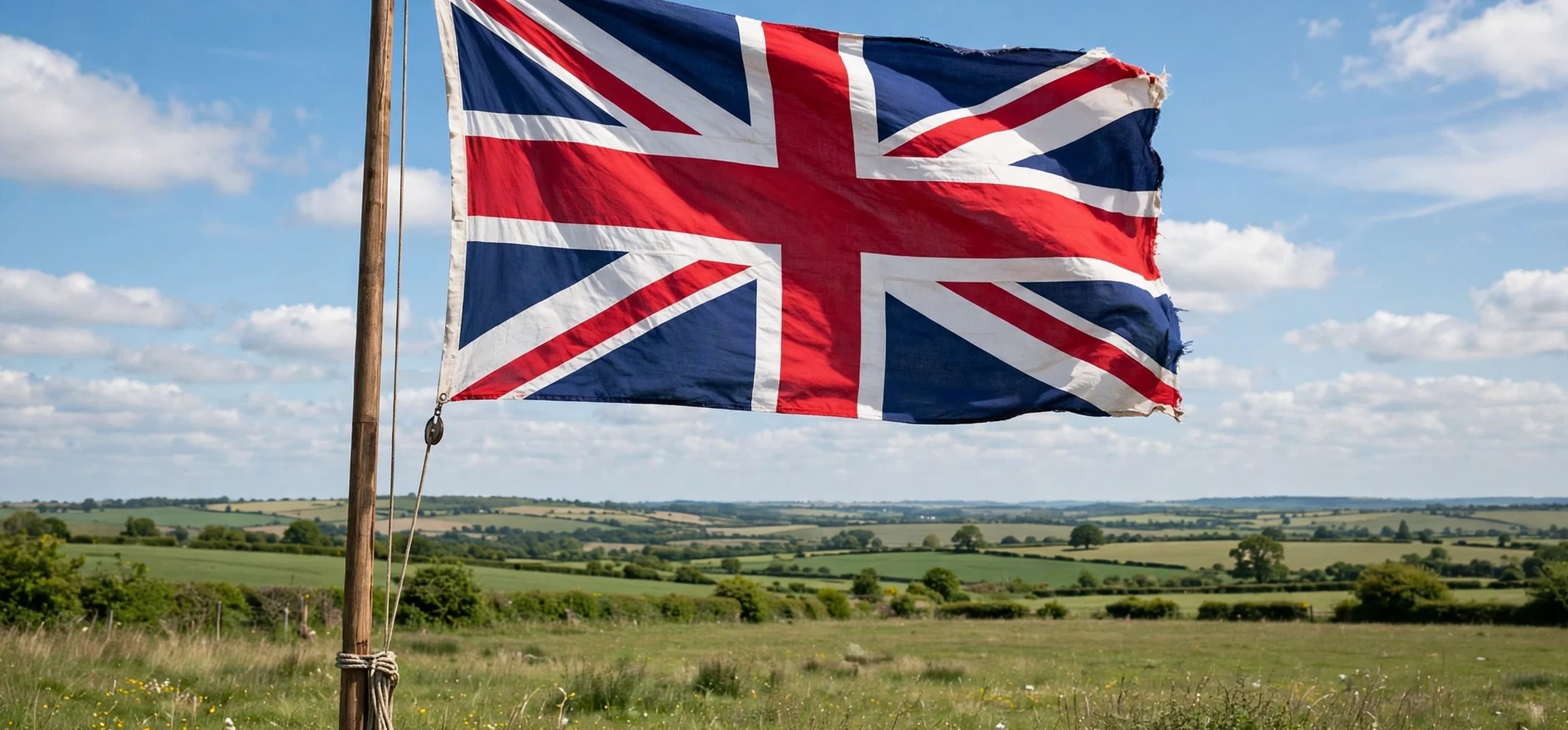
The british flag nickname most people know is the Union Jack, a name that is used around the world for the flag of the United Kingdom. It is also, famously, a name that causes debate, because many guides will tell you that the flag should properly be called the Union Flag, and that Union Jack is only correct in certain contexts. So which is right, and why do both names persist? This guide explains the british flag nickname in plain terms, covering what the flag is, where the nickname came from, how the two names are used today, and how to talk about the flag accurately without getting tangled in the argument.
At its simplest, the flag combines the crosses associated with three patron saints: Saint George for England, Saint Andrew for Scotland, and Saint Patrick for Ireland. The red cross of Saint George sits over the white saltire, or diagonal cross, of Saint Andrew, with the red saltire of Saint Patrick also woven into the design, all on a blue field. The result is instantly recognisable, and it appears on buildings, uniforms, products, and celebrations far beyond the United Kingdom. Understanding the nickname means understanding both the design and the history behind it.
This article is written as a general guide, not as an official statement. For formal or ceremonial use, such as flying a flag on a public building, the safest step is to check the current guidance from the official source responsible for that building or occasion, because flag protocol can vary by context. For everyday conversation, schoolwork, quizzes, and general writing, the explanations below will help you use the names confidently and correctly.
British Flag Nickname: The Short Answer
The short answer to the british flag nickname question is that Union Jack is the widely recognised nickname for the flag, and Union Flag is the formal name. In everyday speech, most people say Union Jack, and they will be understood immediately, whether they are talking about a flag on a building, a design on clothing, or a symbol in a film. In formal writing, official documents, and flag protocol guides, Union Flag is often preferred, because it describes the flag itself, rather than a particular use of it.
The debate arises from an older idea that Jack referred specifically to a small flag flown at the bow, or front, of a ship, known as a jack. On that reading, Union Jack would properly mean the Union Flag when flown as a jack on a ship, and Union Flag would be the correct name on land. That distinction was once taught widely, and it still appears in some guides. In modern usage, however, Union Jack is commonly used for the flag in general, on land and at sea, and many official and authoritative sources now accept both names for the flag itself.
The practical conclusion is reassuring: you are unlikely to be misunderstood if you say Union Jack, and you are unlikely to be corrected harshly if you say Union Flag. The choice often depends on tone. Union Jack feels familiar and conversational. Union Flag feels formal and precise. Both refer to the same flag, and both are used by reputable sources, so the best choice is the one that fits the context in which you are writing or speaking.
British Flag Nickname and Design: What the Pattern Means
The design of the flag tells a story about union, in the sense of different parts coming together. The white diagonal cross on blue is associated with Saint Andrew, the patron saint of Scotland. The red upright cross is associated with Saint George, the patron saint of England. The red diagonal cross is associated with Saint Patrick, the patron saint of Ireland. When those elements are combined, the flag becomes a visual summary of a political union, rather than a symbol of a single nation alone.
One detail that often surprises people is that the design is not symmetrical. The red diagonal stripes are offset, so that the white stripe appears wider on one side than the other. That offset is deliberate, and it reflects the way the crosses are layered, with the cross of Saint Andrew taking precedence in certain positions. It also means that the flag has a correct way up. Flying it upside down is a common mistake, and it is one of the details that flag enthusiasts are quickest to notice, because the difference is subtle but real.
Colour also matters in how the flag is described. The blue field is a deep blue, the red crosses are a strong red, and the white elements provide contrast and separation. In reproductions, the exact shades can vary slightly depending on the material, the printing process, and the lighting, but the pattern itself remains the same. When describing the flag in writing, it is usually enough to name the colours and the crosses, rather than trying to specify exact colour codes, unless you are working on a design or manufacturing project where precision is required.
British Flag Nickname: How the Name Developed
The history of the british flag nickname is tied to the history of the flag itself, which developed as different kingdoms and territories came together. The earliest version combined the crosses of Saint George and Saint Andrew, reflecting the union of England and Scotland. A later version added the cross of Saint Patrick, reflecting the union with Ireland, and created the version that is familiar today. Each change to the design was a political act, as well as a design decision, which is why the flag carries so much historical weight.
The word Jack in the nickname has its own history. In naval language, a jack is a small flag flown at the bow of a ship, and the term has been used for centuries. Some accounts link the word to a personal name, others to the idea of a small flag, and others to naval tradition more broadly. The exact origin is debated, which is part of why the Union Jack versus Union Flag discussion has lasted so long: the history is rich, but not every detail is settled beyond doubt.
What is clear is that the nickname spread far beyond naval use. As the flag appeared on ships, on buildings, on uniforms, and later on products and popular culture, the name Union Jack travelled with it. By the time the flag became a global symbol, recognised even by people who had never visited the United Kingdom, Union Jack was already the name most people knew. That popularity is itself a piece of history, showing how a nickname can become more familiar than a formal name.
British Flag Nickname in Everyday Use Today
Today, the british flag nickname appears in many different contexts, and its meaning shifts slightly with each one. In conversation, it is simply the name of the flag. In fashion and design, it is shorthand for a pattern that suggests British style, heritage, or pop culture. In sport, it appears on kits, banners, and fan displays. In film and television, it can signal a British setting, a British character, or a playful reference to British identity. In each case, the audience understands the reference immediately, which is why the pattern remains so popular.
That popularity also means the flag is sometimes used in ways that have little to do with its formal meaning. A Union Jack pattern on a bag, a phone case, or a piece of clothing is often a design choice, rather than a statement about politics or national identity. That is normal for a symbol that has been in use for centuries: it accumulates layers of meaning, and different people respond to different layers. A historian may see a political union, a designer may see a bold pattern, and a fan may see a favourite band, film, or team.
When writing about the flag, it helps to be clear about which layer you mean. If you are writing about history or protocol, use precise language and cite official guidance where appropriate. If you are writing about design or popular culture, it is enough to name the pattern and explain why it is recognisable. In both cases, avoiding sweeping claims about what the flag means to everyone will make your writing more accurate and more respectful of different perspectives.
British Flag Nickname Versus Union Flag: Which Should You Use?
Choosing between Union Jack and Union Flag is less about right and wrong, and more about audience and purpose. For a general audience, Union Jack is the safer choice for recognition, because it is the name most readers will know first. For a formal audience, such as a school essay, an official report, or a piece about flag protocol, Union Flag may be the safer choice, because it is the formal name and it avoids the naval debate altogether. Many writers solve the problem by using both: they introduce the flag as the Union Flag, commonly known as the Union Jack, and then use the shorter nickname afterwards.
That combined approach has several advantages. It shows that you know the formal name, it acknowledges the nickname that readers recognise, and it avoids taking a side in a debate that does not need to be settled for most purposes. It also helps search and clarity, because readers who search for either name will find the same flag. In a longer article, you can then use the nickname for brevity, while returning to the formal name when discussing protocol or history.
Avoid, however, inventing additional nicknames or presenting a casual nickname as if it were official. The flag is sometimes given playful nicknames in specific contexts, such as in sport or in advertising, but those are not general names for the flag, and they should not be presented as such. Stick to the two established names, explain the difference, and let the context guide the choice.
Common Mistakes When Talking About the British Flag Nickname
One common mistake is to describe the flag as the flag of England alone. England has its own flag, the red cross of Saint George on white, which is different from the Union Flag. The Union Flag represents the United Kingdom as a whole, and confusing the two is a frequent error in casual writing. Keeping that distinction clear will improve accuracy immediately.
Another common mistake is to fly or draw the flag upside down, because of the offset red diagonals described earlier. In a drawing, a photograph, or a digital design, it is worth checking the orientation against a reliable reference image before publishing. A small error in orientation is easy to make and easy to spot, and it can undermine an otherwise careful piece of work.
A third mistake is to assume that the flag has always looked exactly as it does today. The design changed as the political union changed, and earlier versions looked different. When writing about history, it helps to specify which version you mean, and to avoid projecting the current design backwards onto earlier periods. That care with chronology is a hallmark of good historical writing, whatever the topic.
| Element | Associated saint | What to look for |
|---|---|---|
| Red upright cross | Saint George | Bold red cross on white |
| White diagonal cross | Saint Andrew | White saltire on blue |
| Red diagonal cross | Saint Patrick | Red saltire, offset in the design |
| Blue field | Background | Deep blue behind the crosses |
British Flag Nickname: Frequently Asked Questions
Is Union Jack the official name?
Union Flag is generally treated as the formal name, while Union Jack is the widely used nickname. Both names are recognised in modern usage, and many authoritative sources accept Union Jack for the flag in general, not only for naval use.
Why is the flag not symmetrical?
The red diagonal stripes are offset because of the way the crosses of Saint Andrew and Saint Patrick are layered. That offset gives the flag a correct way up, and it is a useful detail to check when drawing or displaying the flag.
Is the Union Flag the same as the English flag?
No. The English flag is the red cross of Saint George on a white field. The Union Flag combines elements associated with England, Scotland, and Ireland, and it represents the United Kingdom.
Can I use the Union Jack pattern in design?
The pattern is widely used in design and popular culture. For commercial or formal projects, check the relevant guidance for that context, and make sure any reproduction is accurate in pattern and orientation.
Conclusion: British Flag Nickname in One Clear Summary
The british flag nickname is Union Jack, and the formal name is Union Flag. Both names refer to the same flag, a design that combines the crosses of Saint George, Saint Andrew, and Saint Patrick on a blue field. The nickname grew from naval tradition, spread into everyday language, and remains the name most people recognise first. The formal name remains the preferred choice in official and protocol contexts.
For further reading on this site, see our retro television guide for how recognisable symbols work in popular culture, and our guide to citing sources in text for tips on writing about historical topics accurately. Remember the simple rule: use Union Flag for formality, use Union Jack for familiarity, and when in doubt, introduce both, so that every reader knows exactly which flag you mean.



