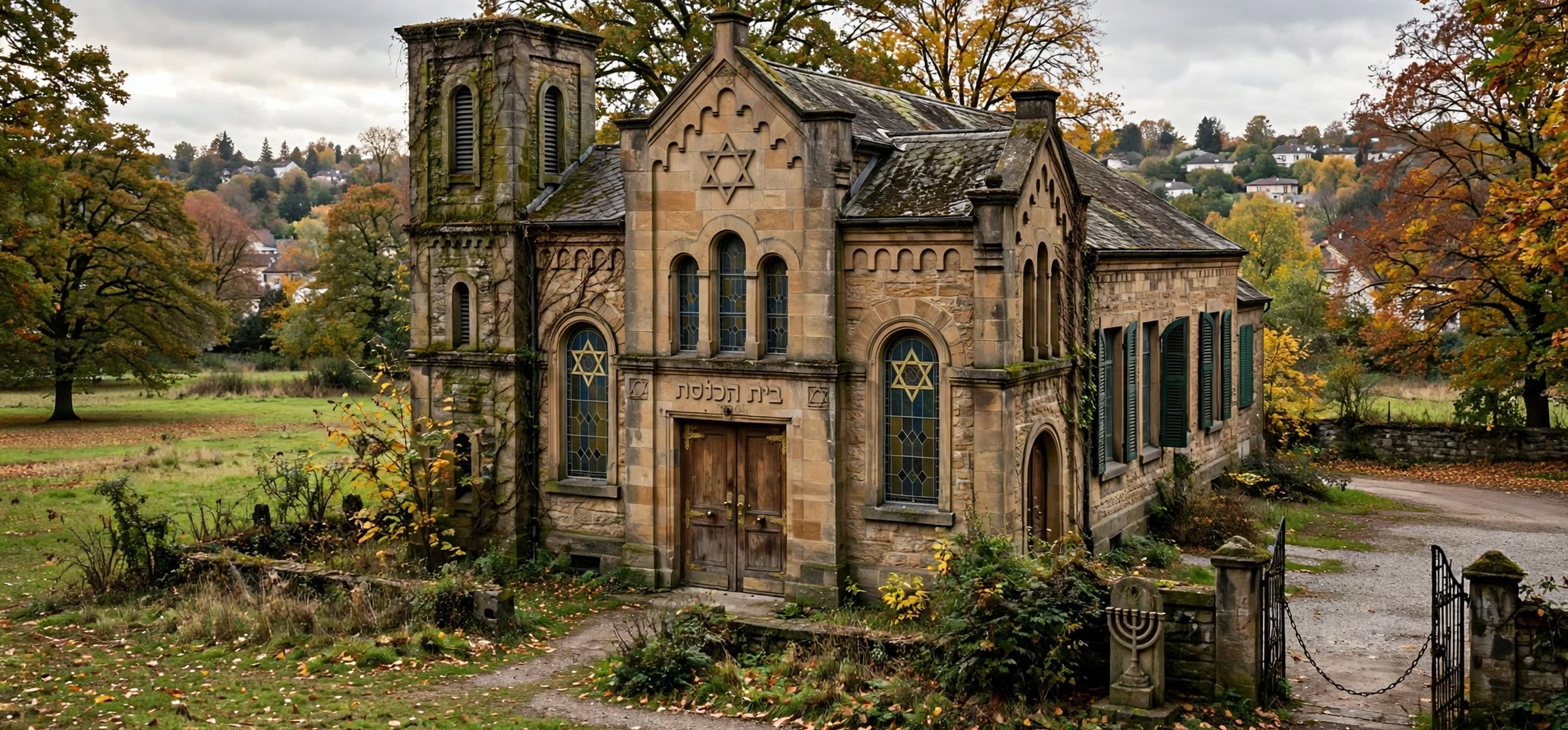
If you searched for “jewish churches are called” something, here is the clear and respectful answer: Jewish houses of worship are not called churches. They are called synagogues. The question behind “jewish churches are called” what is understandable, because in everyday English the word church is often used loosely for any place of worship, but in Jewish tradition the correct and respectful term is synagogue, and that distinction matters. A synagogue is the central place where a Jewish community gathers for prayer, study, life-cycle events, and communal life, and learning why that name is used, and what other names you may hear, helps avoid a common misunderstanding.
This guide explains what Jewish houses of worship are called, why they are not churches, and what the other terms you may hear, such as shul and temple, actually mean. It is written as a factual explainer, not as a theological argument, and it respects the diversity within Judaism: different movements and communities use slightly different language, and all of it belongs to the same broad tradition of Jewish communal worship.
Jewish Churches Are Called Synagogues, Not Churches
The short answer to “jewish churches are called” what is synagogue. The word synagogue comes from Greek, meaning a place of assembly or gathering together, and it entered English through the translation of the Jewish communal institution. In Hebrew, a synagogue is called a beit knesset, which means a house of assembly. That name captures its purpose: it is a house where the community assembles. A synagogue is not defined by a single ritual alone; it is a community centre for prayer services, Torah reading, study, education, weddings, funerals, and celebrations.
The word church, by contrast, comes from a Christian tradition and refers in Christian usage to a Christian house of worship and to the Christian community itself. Calling a synagogue a church is therefore not just imprecise; it applies the vocabulary of one faith to another faith’s institution. Most Jewish people would politely correct the term, not out of offence at a question asked in good faith, but because using the right name shows respect for a distinct tradition. If you are writing, speaking, or visiting, synagogue is the safe, accurate, and respectful word to use.
Searches for what jewish churches are called often come from school projects, travel planning, or simple curiosity, and the answer stays the same across those contexts: jewish churches are called synagogues in general English. When someone asks what jewish churches are called in conversation, synagogue is the word that will be understood by Jewish and non-Jewish listeners alike.
What Jewish Churches Are Called in Different Communities: Shul and Temple
People who ask what “jewish churches are called” often hear two other words as well: shul and temple. Both are real, and both need a little context so you do not use them in the wrong setting.
Shul
Shul is a Yiddish word, widely used in Orthodox and many traditional Ashkenazi communities, for a synagogue. It comes from a word meaning school, which reflects the synagogue’s role as a place of study as well as prayer. If a Jewish friend says, “I am going to shul,” they mean they are going to synagogue. Shul is an insider term in many communities, warm and everyday, but synagogue is the general English term that works in all contexts.
Temple
Temple is used by many Reform Jewish congregations in English-speaking countries, especially in the United States, to name their synagogues. A Reform congregation may be called, for example, Temple Beth Something, and its building is its synagogue. The word temple in this usage does not mean the ancient Temple in Jerusalem; it is a modern congregational name chosen in the nineteenth century by Reform communities. Some Jews prefer synagogue precisely to avoid confusion with the ancient Temple, while others embrace temple as their community’s traditional name. Both usages are legitimate within their communities, and the congregation’s own name is always the best guide.
Other names you may hear
You may also hear beit midrash, meaning a house of study, for a study hall attached to or within a synagogue, and in some Sephardi communities, other historic terms for the communal prayer house. These are specific rooms or traditions, not general replacements for synagogue. When in doubt, synagogue covers all of them in general English.
It is worth repeating the core point for anyone skimming: jewish churches are called synagogues, not churches, and jewish churches are called shul only in certain communities as an everyday alternative. If you remember only one phrase from this guide, remember that jewish churches are called synagogues.
Why Jewish Churches Are Called Synagogues: A Brief History
Synagogues developed as places where Jewish communities could gather for prayer and study, especially after the destruction of the ancient Temple in Jerusalem. The ancient Temple was a single central sanctuary with sacrificial worship led by priests, and it cannot be rebuilt in the same form today. The synagogue grew as a different kind of institution: local, communal, and centred on prayer, reading from the Torah, and study, led in many cases by a rabbi as teacher rather than by a priest offering sacrifices.
That history explains why the vocabulary differs. A synagogue is not a smaller version of a church, and it is not a branch of another faith’s building. It is a distinct institution with its own history, its own layout, and its own communal life. Inside a typical synagogue you will find an ark holding Torah scrolls, a raised platform for reading, seating for the congregation, and often classrooms, a library, and a social hall. The details vary by movement and by community, but the pattern of prayer, study, and gathering is shared.
Visitors sometimes arrive still wondering what jewish churches are called, and the building itself often answers the question: the sign will say synagogue, temple, or congregation, and the community inside will describe itself as a synagogue community. In short, jewish churches are called synagogues wherever general English is used.
What Happens Inside a Synagogue
A synagogue hosts regular prayer services, including Shabbat services on Friday evening and Saturday morning, weekday services in many communities, and festival and High Holy Day services. The service includes prayers, often in Hebrew, readings from the Torah on set days, and a sermon or teaching. A rabbi may lead the community, teach, and offer pastoral care, while a cantor may lead the musical parts of the service. In many synagogues, members of the congregation also take part in leading prayers and reading from the Torah.
Beyond prayer, synagogues are community hubs. They run religious schools for children, adult education classes, youth groups, social events, and charitable work. Weddings, bar and bat mitzvah ceremonies, baby-naming ceremonies, and funerals are held there or connected to the community. That breadth is why the Hebrew name, house of assembly, fits so well: the synagogue assembles the community for the whole of Jewish life, not only for one weekly service.
Synagogue, Church, and Mosque: Respectful Terminology Compared
Each major faith tradition has its own name for its house of worship, and using the right name is a simple form of respect. Christians worship in churches, chapels, cathedrals, and other Christian buildings, depending on denomination and size. Muslims worship in mosques. Jews worship in synagogues. Hindus worship in temples or mandirs, Sikhs gather in gurdwaras, and Buddhists gather in temples, monasteries, or meditation centres, depending on tradition. The pattern is clear: every tradition names its own space, and borrowing one tradition’s word for another’s space creates confusion.
This matters in writing as well as speech. News reports, school projects, travel guides, and essays should say synagogue when they mean a Jewish house of worship, not church. If you are unsure which term a particular congregation uses, check its own website or sign: a Reform congregation may call itself a temple, an Orthodox congregation may call itself a shul in conversation, but both are synagogues in general English, and both should be described as such unless you are quoting their own name.
| Term | Meaning | When to use it |
|---|---|---|
| Synagogue | A Jewish house of worship and assembly | General English, all contexts |
| Shul | Yiddish word for synagogue, also implying study | Common in Orthodox and traditional Ashkenazi conversation |
| Temple | Name used by many Reform congregations for their synagogue | When it is the congregation’s own name |
| Beit knesset | Hebrew for house of assembly | Formal or Hebrew-language contexts |
| Church | A Christian house of worship | Not for a Jewish house of worship |
Visiting a Synagogue Respectfully
If you are invited to a synagogue, a few respectful habits help. Dress modestly, follow any guidance about head coverings, and sit where you are directed, since some synagogues have separate seating and others have mixed seating, depending on movement and custom. Phones are usually switched off during services, photography is generally not appropriate during prayer, and visitors are often welcomed warmly and given a prayer book or guide. If you are unsure about anything, asking a member of the community or the synagogue office beforehand is always welcome. The key point is the same as with language: follow the community’s own customs rather than assuming the customs of another faith apply.
It is also worth avoiding stereotypes. Judaism is diverse: Jews differ in observance, language, culture, and belief, and no single synagogue represents all Jewish people. Some synagogues are large and formal, others are small and informal. Some use mostly Hebrew in services, others use more English. Some have organs and choirs, others do not. That diversity is normal, and it is a strength of the tradition, not a contradiction. The one shared point is the name: across that diversity, the house of worship is a synagogue.
Teachers, journalists, and travellers all benefit from getting this term right, because jewish churches are called synagogues in style guides, encyclopaedias, and official listings. Using that term avoids confusion and shows respect for a distinct tradition.
Frequently Asked Questions About What Jewish Churches Are Called
Are Jewish churches called synagogues?
Yes, in the sense that the question intends. Jewish houses of worship are called synagogues. They are not called churches, because church is a Christian term. The correct general English word is synagogue.
What is the difference between a synagogue and a temple?
A synagogue is the general name for a Jewish house of worship. Temple is the name many Reform congregations use for their own synagogue. In that usage, a temple is a synagogue, not a different kind of building. The ancient Temple in Jerusalem is a separate historical institution.
What does shul mean?
Shul is a Yiddish word for synagogue, used widely in Orthodox and traditional communities. It reflects the synagogue’s role as a place of study as well as prayer. In general English, synagogue is the term to use.
Can I call a synagogue a Jewish church?
It is best not to. Jewish people generally prefer synagogue, and using church for a synagogue can sound as if Judaism is being treated as a form of Christianity. Using synagogue is accurate, respectful, and clear.
One final reminder for writers and speakers: jewish churches are called synagogues, and when you use that word you are using the term Jewish communities themselves use in general English. If a congregation calls itself a temple, use its own name in that specific case, but remember that jewish churches are called synagogues as the general rule.
Conclusion
So, what are Jewish churches called? The accurate answer is that Jewish houses of worship are called synagogues, also known in conversation as shul and, in many Reform congregations, as temple. They are not churches, and that distinction is not a technicality: it reflects a distinct history, a distinct form of communal worship centred on prayer and study, and a distinct community life. Using the word synagogue is a small choice that shows respect and clarity, whether you are writing an essay, planning a visit, or simply answering a curious question. If you found this explainer useful, you may also enjoy related meaning guides on this site, such as the guide to the ankh meaning in Christian contexts and the biblical meaning of testimony, which show how carefully religious language is used across traditions. For more on Hebrew terms in Jewish life, see also the guide to El Elohe Israel meaning.



