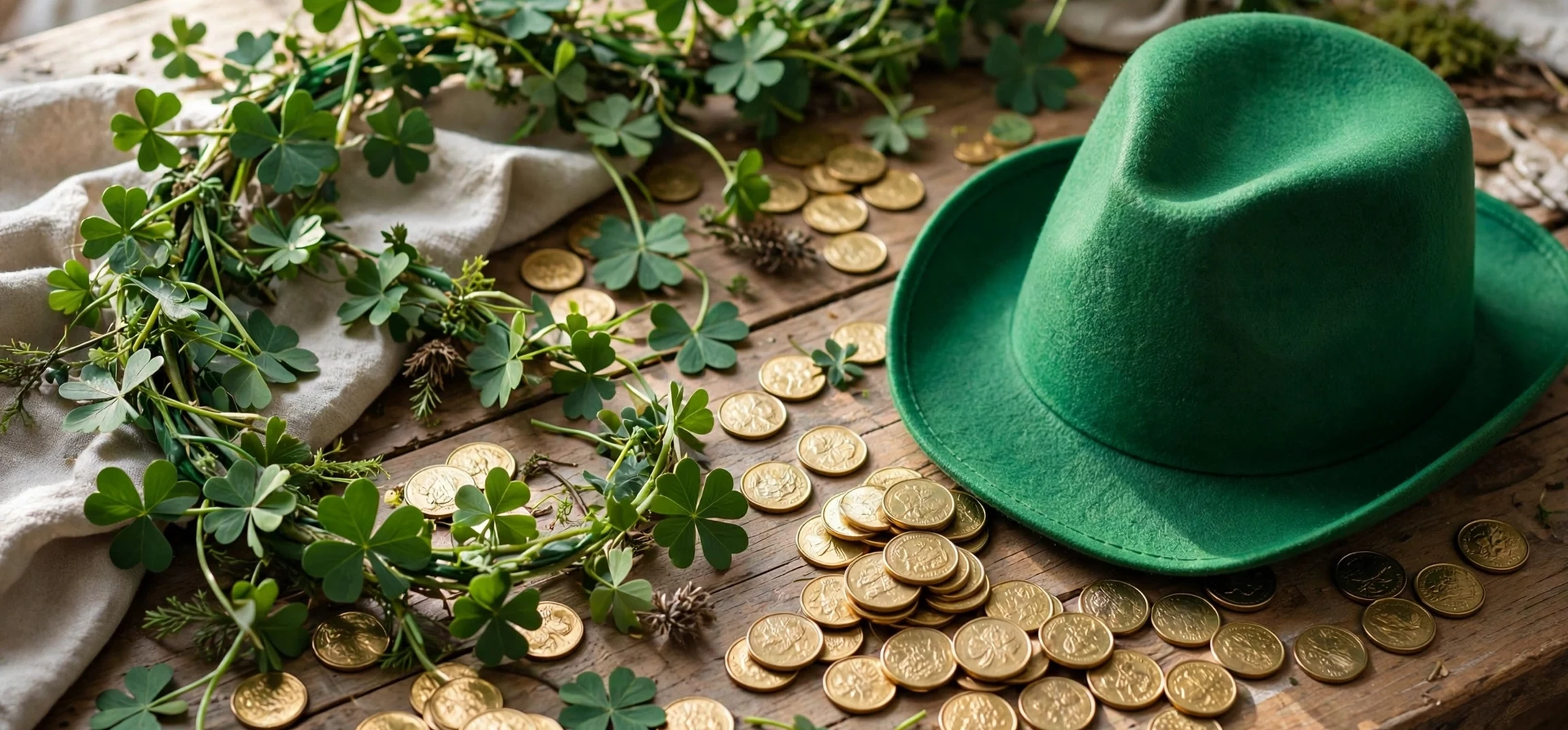
When people ask about the real meaning of st patrick’s day, they are often asking about much more than parades, green clothing and festive gatherings. Beneath the modern celebration lies an older story about faith, identity, migration and belonging, centred on a real historical figure whose life has become wrapped in legend, devotion and cultural pride. This guide explains the real meaning of st patrick’s day in full: who St Patrick was according to tradition, how a religious observance grew into a worldwide cultural celebration, what its best-known symbols originally represented, and why the day still matters to so many people today, whether or not they have Irish heritage.
It is worth stating the approach of this guide plainly. The early life of St Patrick is known mainly through tradition and through two short writings attributed to him, rather than through the kind of detailed records modern readers expect, so historians differ on details and legends have filled many gaps. This article therefore separates what tradition holds, what is legend, and what the modern celebration has added, so you can enjoy the festivities without mistaking every colourful story for settled history. That honesty is part of the real meaning of st patrick’s day: it is a day shaped by faith and memory as much as by documented fact.
The real meaning of st patrick’s day Beyond Parades
At its heart, the real meaning of st patrick’s day is remembrance. The observance began as a way to remember St Patrick, the figure traditionally credited with bringing Christianity to Ireland and with shaping the early Irish church. For centuries, the emphasis was religious and reflective: a feast day in the church calendar honouring a patron saint, marked by worship, prayer and community gathering. The parades, music, dancing and public festivities that many people associate with the day today came later, and they grew up around that older core rather than replacing it entirely. Many celebrations still carry both layers at once, with religious observance in the morning and cultural festivities later in the day.
The day also carries a second, equally important meaning: Irish identity, at home and abroad. As Irish people emigrated around the world, the observance travelled with them and became a way to stay connected to home, to language, to music and to family stories. In cities far from Ireland, a parade or a gathering became a public statement of belonging: we are here, we remember where we came from, and we invite our neighbours to celebrate with us. That is why the real meaning of st patrick’s day feels personal to so many people, even those who are not religious. It is about heritage and community as much as about history.
A Day of Belonging
Belonging is the thread that ties the religious and cultural layers together. A feast day gives a community a shared moment in the year to gather, to tell its stories and to pass them to children. An emigrant community adds another layer: the shared moment becomes a bridge back to a homeland that many members may never have lived in. When people wear green, play traditional music, cook familiar food or attend a parade, they are participating in that bridge-building, whether they think of it in those terms or not. The celebration works because it is open: neighbours, friends and visitors are welcomed in, and the day becomes a shared civic occasion rather than a closed one.
Who Was St Patrick? The real meaning of st patrick’s day in History
Tradition places St Patrick in early medieval Ireland, in the era when Roman Britain was fading and Ireland lay beyond direct Roman rule. According to the traditional account, Patrick was born in Britain, captured as a young man and brought to Ireland, where he spent years in captivity working as a herdsman. During that hardship, tradition says, his faith deepened. After escaping and returning home, he later returned to Ireland as a missionary, travelling, preaching, baptising and helping to organise the early church. The two short writings attributed to him, a confession of faith and a letter, present a humble, self-doubting man who credited his work to grace rather than to his own brilliance, and that humility is part of why he remained beloved.
It is important to be honest about the limits of that account. The writings attributed to Patrick are brief, they do not provide a full biography, and later medieval lives of the saint added dramatic episodes that historians treat as legend rather than evidence. The famous story that Patrick banished all snakes from Ireland, for example, is best understood as symbolic: Ireland has no native snakes in the natural record, and the tale is usually read as an image of driving out old pagan practices or evil, not as a literal wildlife event. Similarly, the shamrock story, in which Patrick used the three-leafed plant to explain a complex doctrine of three persons in one God, is a beloved teaching tale whose historical basis is uncertain, even though it has become one of the day’s most enduring symbols. Readers interested in how religious symbols acquire layered meanings may enjoy our guide to the meaning of the ankh in Christian contexts, which shows a similar journey from ancient symbol to modern interpretation.
Patrick and Early Irish Christianity
Whatever the exact details of his life, the figure of Patrick became central to how Ireland understood its own Christian story. Early Irish Christianity developed distinctive features, including a strong monastic tradition, a love of learning and manuscript art, and missionaries who travelled far beyond Ireland to share their faith and scholarship. Patrick was remembered as the founding figure of that story, the missionary who planted the seed, even though later scholars note that other missionaries were also active and that the process was gradual. The day that honours him therefore honours not only one man, but the whole tradition that grew from those early centuries: monasteries as centres of learning, scholars preserving texts through difficult times, and a faith expressed through poetry, music and art.
From Religious Observance to Public Celebration
For a long time, the observance was primarily a religious feast, marked quietly in Ireland with church services and family gatherings. The transformation into a large public celebration happened substantially through the Irish diaspora, especially in North America, where Irish immigrants and their descendants organised parades, societies and public festivities as expressions of pride and solidarity. Those parades, in turn, influenced celebrations back in Ireland, which gradually adopted larger public festivals, cultural programmes and tourism events alongside the religious observance. The result is the layered celebration familiar today: a day that can be, at different moments, devotional, cultural, civic and simply joyful.
That evolution explains some of the tensions around the modern day. Some people feel the religious core has been crowded out by commercial festivities, drinking and generic green-themed partying, while others argue that a living tradition must change and that a joyful public celebration is itself a valid expression of community pride. Both views have merit, and the healthiest way to understand the day is to hold both together: it is a feast day with a religious origin, and it is also a cultural festival that belongs, in practice, to everyone who wants to celebrate Irish heritage respectfully. Knowing the history lets each person choose which layer to emphasise, rather than assuming the party is the whole story or that the party is a betrayal of it.
Green, Music and Festivity
Green is the colour most associated with the day, linked to Ireland’s landscape, to its national symbolism and to the shamrock tradition. Traditional Irish music, dance, song and storytelling are central to many celebrations, because they carry the culture in a form that can be shared across generations and languages. Food also plays a role, with families and communities gathering for meals that evoke home, whether through traditional dishes or through modern adaptations. The festive layer is not frivolous: shared music, food and colour are how communities teach children who they are, and how newcomers are welcomed into the celebration.
Symbols and Their Meanings
The shamrock is the most famous symbol of the day. Tradition links it to Patrick’s teaching, as described above, and it has also become a broader emblem of Ireland itself, worn as a badge, printed on decorations and carried in parades. The distinction between a shamrock, with three leaves, and a four-leaf clover, a rare variation associated with luck in general folklore, is worth knowing: the shamrock’s meaning here is specifically Irish and traditionally religious, while the four-leaf clover belongs to a different, wider luck tradition. Wearing a shamrock is therefore a small act of identification with Ireland and with Patrick’s story, not merely a generic lucky charm.
Other symbols carry their own layers. The harp is a national emblem of Ireland with deep musical associations. The colour green, as noted, evokes the landscape and national identity. Leprechauns and pots of gold belong to Irish folklore and to the playful, commercial side of the modern celebration, rather than to the religious story, and they are best enjoyed as folklore and fun, not as history. Understanding which symbols are devotional, which are national, which are folkloric and which are commercial helps you celebrate with respect and with a clearer sense of what each emblem actually represents. For a parallel look at how testimony and witness language works in religious traditions, readers may find our guide to the biblical meaning of testimony helpful background.
| Symbol or theme | Traditional association | What it represents in the celebration |
|---|---|---|
| St Patrick himself | Missionary and patron saint of Ireland | Faith, humility, perseverance and Irish Christian heritage |
| The shamrock | Teaching tale linked to Patrick | Irish identity and a traditional emblem of the day |
| The colour green | Landscape and national symbolism | Pride, belonging and visible community celebration |
| Parades | Diaspora pride and public festivity | Community, welcome and shared civic joy |
| Music and dance | Irish cultural tradition | Living heritage passed between generations |
| The harp | National emblem and musical heritage | Ireland’s artistic and cultural identity |
| Leprechauns and folklore | Irish folk tradition | Playful, commercial side of the modern festival |
How the Meaning Travels Around the World
One of the remarkable features of the modern observance is how widely it has travelled. Irish emigration carried it to North America, Britain, Australia and many other places, and in each place it adapted to local conditions while keeping recognisable elements: green, music, parades and gatherings. In some cities, major landmarks are lit green for the occasion, and public festivals run cultural programmes featuring Irish artists, writers, dancers and chefs. That global spread has a double effect: it strengthens Irish identity abroad, and it introduces Irish culture to people with no Irish background, who may discover music, literature or history through a celebration they first joined for fun.
The global version of the day also raises a question worth asking with respect: how do you celebrate another culture’s heritage well? The answer implied by the day’s own history is generous: learn a little of the story, enjoy the music and the gathering, respect the religious layer even if you do not share it, and avoid reducing a whole culture to stereotypes about drinking or luck. A celebration that begins in curiosity and ends in community is faithful to the deeper meaning of the day, which was never only about one island, but about how faith, migration and memory create belonging far from home. Our existing guide to Saint Patrick’s Day meaning offers a shorter companion overview for readers who want a quick refresher alongside this fuller history.
Frequently Asked Questions About the real meaning of st patrick’s day
What is the real meaning of st patrick’s day in short?
In short, the real meaning of st patrick’s day is remembrance of St Patrick and celebration of Irish faith, heritage and community, layered over centuries from a religious feast into a worldwide cultural festival. It honours a patron saint, it expresses Irish identity at home and abroad, and it welcomes neighbours into music, gathering and shared pride.
Was St Patrick Irish by birth?
According to tradition, Patrick was born in Britain and brought to Ireland as a captive in his youth, later returning as a missionary. He is therefore remembered as Ireland’s patron saint by mission and adoption rather than by birth, which makes his story, fittingly, a story about belonging to a place through service and love rather than through origin alone.
Did St Patrick really banish snakes from Ireland?
The snake story is best understood as legend and symbol rather than literal history. Ireland has no native snake population in the natural record, and the tale is usually interpreted as an image of driving out pagan practices or evil. Enjoy it as a powerful story, not as a zoological claim, and you will be closer to how the tradition itself has often understood it.
Is the day only for Irish people?
No. While the day honours Irish heritage, its modern public celebrations are widely open, and many people without Irish ancestry join parades, concerts and gatherings. The respectful way to join in is to learn a little of the history, enjoy the culture genuinely, and remember the religious and heritage layers beneath the festivities.
What is the real meaning of st patrick’s day for people who are not religious?
For people who are not religious, the real meaning of st patrick’s day is usually heritage, community and belonging: a chance to celebrate Irish culture, music and identity, and to gather with friends and neighbours. The real meaning of st patrick’s day still includes its religious origin, but no one needs to share that faith to appreciate the welcome, the music and the shared pride at its heart.
How can families teach the real meaning of st patrick’s day to children?
Families can teach the real meaning of st patrick’s day by telling Patrick’s traditional story simply, explaining the shamrock tale as a teaching story, playing Irish music, and talking about migration and belonging in terms children understand. Framing the real meaning of st patrick’s day as remembrance plus celebration helps children enjoy the festivities while knowing what lies beneath them.
Key Takeaways on the real meaning of st patrick’s day
The real meaning of st patrick’s day is best held as several layers at once: faith, heritage, migration and community, each visible in different parts of the celebration.
- The real meaning of st patrick’s day begins with remembrance of a patron saint and early Irish faith.
- The real meaning of st patrick’s day includes Irish identity carried around the world by emigrants.
- The real meaning of st patrick’s day lives in music, gathering, food and shared public celebration.
- The real meaning of st patrick’s day asks for respect: enjoy folklore and fun without reducing a culture to stereotypes.
- The real meaning of st patrick’s day welcomes neighbours in, turning a feast day into a shared civic occasion.
Conclusion: Remembering the Heart of the Day
The real meaning of st patrick’s day survives every parade, every green decoration and every change the centuries have brought, because it is rooted in something simple and durable: gratitude for a figure who, according to tradition, loved a people not his own by birth, and a community’s desire to remember that love together. Whether you mark the occasion in worship, in a parade, in music, in a family meal or in quiet reading about Irish history, you are participating in a tradition that has carried faith, migration, learning and belonging across many centuries and many shores. Celebrate joyfully, learn a little more each year, and let the festivities point back to the heart of the matter: a saint remembered, a culture cherished, and a welcome extended to all.