If you searched for what does otter, you probably typed a short, unfinished phrase and want a straightforward answer. This article treats that search term honestly: what does otter is a truncated query, and the most useful way to answer it is to cover what people usually mean when they start typing it. Most often, they want to know what an otter is, what otters are like, and whether otters are mean. So this guide explains otters in general: their temperament, their social behaviour, their play, their hunting, and how to stay safe around wild animals. It is factual animal information only. It makes no claims about any individual animal, and it is not advice about keeping otters as pets.
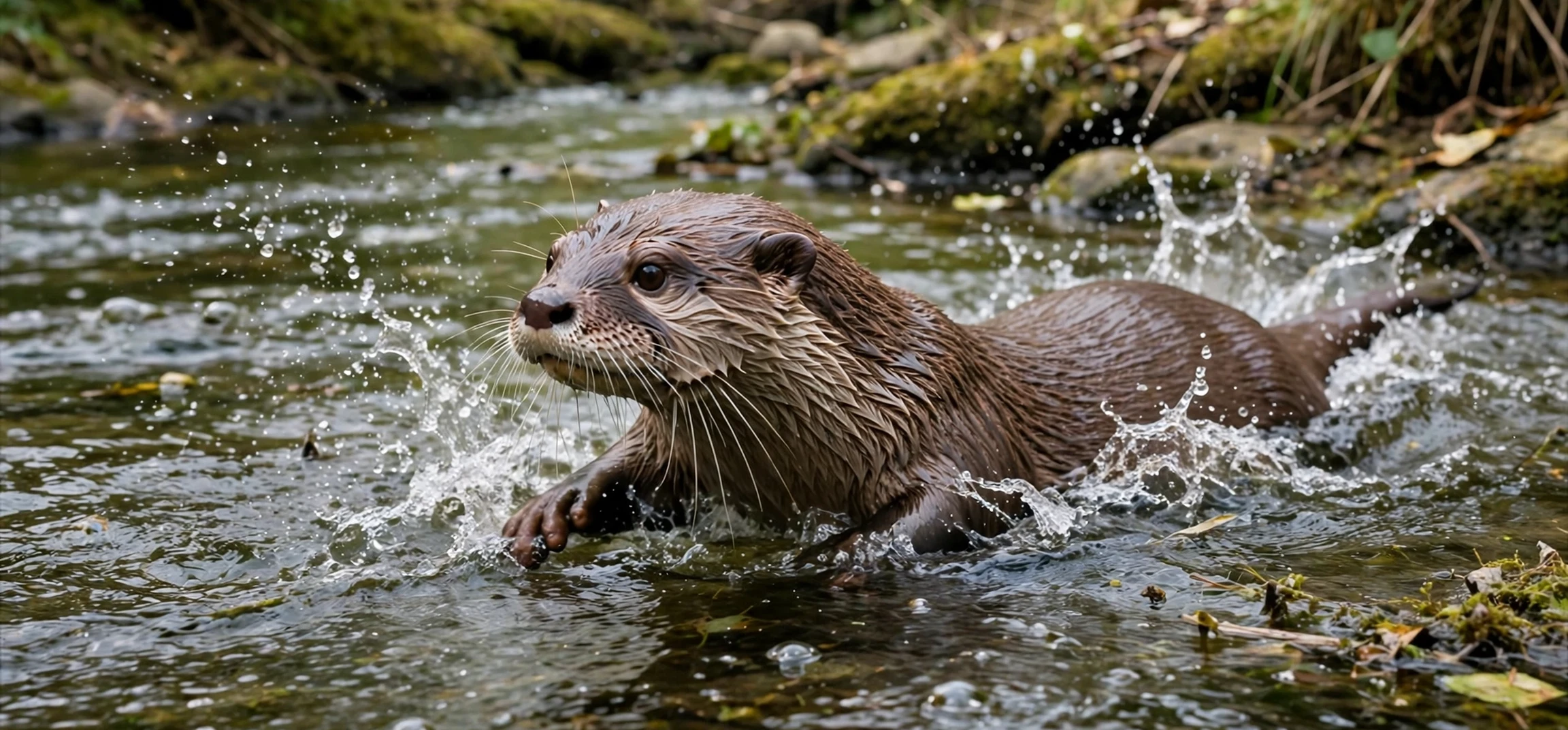
Otters are semi-aquatic mammals belonging to the weasel family. There are thirteen recognised species, living in rivers, lakes, coasts, and wetlands across several continents. The best-known species include the Eurasian otter, the North American river otter, the sea otter of the North Pacific, and the giant otter of South America. Sizes vary enormously. A sea otter can weigh as much as a medium-sized dog, while the smallest species, the Asian small-clawed otter, is closer in size to a large house cat. Despite those differences, all otters share a body built for water: dense fur, a streamlined shape, strong tails, and, in most species, webbed feet.
That aquatic design shapes almost everything about otter behaviour. Otters hunt in water, travel along waterways, and use rivers and coasts as both highways and hunting grounds. Their dense fur traps air and insulates them in cold water, which is why grooming matters so much to them. An otter that cannot keep its fur clean and fluffy loses insulation, so grooming is not vanity; it is survival. Watching otters groom, roll, and rub themselves on banks or rocks is therefore watching essential maintenance, not just play.
What Does Otter Mean as a Search Term?
When someone types what does otter into a search box, the search engine has to guess the missing words. Common completions include what an otter is, what otters eat, what otters do, and whether otters are mean or dangerous. The wording matters because each question has a different answer. Asking what an otter is calls for a description of the animal. Asking whether otters are mean calls for a discussion of temperament, which is more complicated, because temperament in wild animals is not a fixed personality trait like a label on a pet. It is a pattern of behaviour shaped by species, age, sex, season, hunger, fear, territory, and whether young are present.
This article therefore answers the temperament question in context rather than with a single word. A short answer such as yes or no would be misleading. Otters can be playful and curious, and they can also be defensive, territorial, and capable of inflicting serious bites. Both descriptions are true, in different situations. The fuller picture is that otters are wild animals with strong instincts, and their behaviour toward people depends heavily on whether they feel threatened, cornered, or protective of young or food.
Otters are not domestic animals
One of the most important facts for any discussion of otter temperament is that otters are wild animals, not domesticated pets. Domestication is a long process of selective breeding that changes behaviour over generations, and otters have not gone through it. Even otters raised by people retain wild instincts, including a powerful bite, sharp teeth, and a strong drive to defend themselves when frightened. Videos of otters holding hands, juggling stones, or sliding down mud banks show real behaviour, but they show selected moments. They do not show the full range of otter behaviour, and they should not be read as evidence that wild otters are tame or safe to approach.
That distinction also matters for welfare. Otters need water, space, a varied diet, and social conditions suited to their species. They are not suited to ordinary homes, and in many places keeping them is restricted or prohibited. Anyone curious about otters is better served by watching them in reputable wildlife centres, reserves, or documentaries than by imagining them as household companions. Respecting that boundary protects both people and otters.
What Does Otter Behaviour Look Like in the Wild?
What does otter behaviour look like day to day? For most species, the day is organised around water. Otters swim, dive, hunt, groom, rest, and travel along rivers, lakes, or coastlines. River otters often travel considerable distances along waterways, using regular resting places known as holts, which may be burrows, hollow logs, or sheltered spots among roots and rocks. Sea otters spend much of their lives in the water itself, floating on their backs, grooming, eating, and resting in kelp beds, and they famously use tools, such as stones, to crack open shellfish.
Play is one of the most recognisable otter behaviours, and it is also one of the most misunderstood. Young otters chase, wrestle, and slide, and adults also slide down muddy or snowy banks, sometimes repeatedly. Researchers interpret play as practice for hunting, social bonding, and motor development, as well as a way to explore the environment. Play does not mean an animal is friendly toward people. A playful otter is still a wild animal, and play between otters can involve rough wrestling, biting, and chasing that would be alarming if directed at a person.
Social life: solitary, family groups, and rafts
Social structure varies by species, and that variation affects how otters behave toward intruders. Many river otters are largely solitary except for mothers with young, or they form small family groups. Giant otters live in larger family groups that cooperate in hunting and defend territories vocally and aggressively. Sea otters gather in groups called rafts, sometimes numbering many individuals, resting together in kelp. In all cases, mothers with pups are especially protective, and any animal that feels its young are threatened may behave defensively.
Vocal communication is rich in otters. They whistle, chirp, chatter, growl, and scream in different contexts, from contact calls between family members to alarm calls when danger is sensed. Giant otters are particularly vocal, and their calls can be heard over considerable distances. Learning to recognise that otters communicate constantly is a useful corrective to the idea that they are silent or passive animals. They are alert, communicative, and responsive to their surroundings.
Are Otters Mean? Temperament Explained
So, are otters mean? The honest answer is that mean is a human moral label, and it does not fit wild animal behaviour very well. Otters are not spiteful, and they do not attack people out of cruelty. They can, however, be aggressive when they perceive a threat, when they are defending territory or young, when they are competing for food, or when they feel cornered with no escape route. That aggression is functional: it is how a wild animal protects itself and its offspring. From a human perspective, the result can still be frightening and, in rare cases, injurious, because otters have strong jaws and sharp teeth.
Most encounters between people and otters end without incident, because otters usually avoid people when they have the choice. Problems are more likely when people approach too closely, try to feed or touch otters, bring dogs near otter habitat, or block an otter’s escape route to water. Dogs are a particular flashpoint: otters may perceive a dog as a predator or a rival, and confrontations between otters and dogs have been documented. Keeping dogs on leads near rivers and coasts, and giving otters a wide berth, reduces risk for everyone involved.
When otters bite
Otter bites are uncommon relative to how often people encounter otters, but they are not trivial when they happen. An otter’s bite can break skin, cause deep wounds, and carry a risk of infection, as with any wild animal bite. Any bite from a wild animal should be treated seriously and assessed by a medical professional, and local wildlife guidance should be followed. The rarity of bites should not be read as safety, and the severity of a bite should not be read as proof that otters are generally aggressive. Both facts can be true: otters usually avoid people, and an otter that feels trapped can defend itself forcefully.
It is also worth noting that behaviour varies between species and individuals. Giant otters, for example, are larger and more territorially assertive than many smaller species, and they hunt cooperatively, which can make a family group formidable when defending territory. Sea otters are generally less confrontational toward people, but they are still wild animals with powerful forelimbs and a strong bite. General statements about otters should therefore be read as patterns across species, not as guarantees about any individual animal encountered in the wild.
What Otters Eat and How They Hunt
Otters are predators, and their diet reflects the waters they live in. Fish are the main food for many river otters, supplemented by crustaceans, amphibians, small mammals, birds, and insects depending on availability. Sea otters eat a wide range of marine invertebrates, including sea urchins, crabs, clams, mussels, and snails, and they play an ecologically important role by controlling sea urchin populations, which in turn helps kelp forests survive. Giant otters hunt fish cooperatively, sometimes taking large fish and even caimans in their South American rivers.
Hunting style varies, but otters are agile, persistent hunters. They use sensitive whiskers to detect movement in murky water, and they can close their ears and nostrils when diving. Sea otters use stones as tools, placing a stone on their chest while floating and striking shellfish against it, and they keep favourite stones in a loose fold of skin under their foreleg. This tool use is one of the most studied behaviours in otters, and it shows problem-solving ability rather than mere instinct. It also shows why otters need healthy, prey-rich waters: without fish and shellfish, no amount of cleverness can sustain them.
| Species group | Typical habitat | Social pattern | Well-known behaviour |
|---|---|---|---|
| River otters | Rivers, lakes, wetlands | Solitary or family groups | Sliding, long-distance travel |
| Sea otters | North Pacific coasts | Rafts in kelp beds | Tool use, floating on backs |
| Giant otters | South American rivers | Cooperative family groups | Vocal calls, group hunting |
| Small-clawed otters | Asian wetlands, streams | Family groups | Dexterous paws, social grooming |
The table simplifies a diverse family, and individual species differ in detail. Its purpose is to show that there is no single otter temperament or lifestyle. A sea otter resting in a kelp raft and a giant otter defending a river territory are both otters, but they live very different lives. Any guide that describes otters as a single personality type is flattening that diversity.
Otters and People: Watching Safely and Respectfully
The best way to enjoy otters is at a distance. If you see an otter in the wild, stay quiet, keep your distance, and avoid blocking its path to water. Do not try to feed it, touch it, or lure it closer for a photograph. Feeding wild otters teaches them to associate people with food, which can lead to bolder behaviour and to conflict later. It can also harm their health, because human food is not part of their natural diet. A good wildlife encounter is one the animal barely notices.
If you are walking a dog near water where otters live, keep the dog on a lead and under close control, especially at dawn and dusk when otters are often active. If an otter appears, move away calmly and give it space rather than approaching to investigate. If you find an otter that appears injured, orphaned, or in distress, do not handle it yourself. Contact local wildlife rescue or animal control services, who have the training and equipment to help safely. Handling a wild otter without training risks injury to both the person and the animal.
Conservation is part of the otter story too. Several otter species face threats from habitat loss, water pollution, road traffic, fishing gear, and, in some regions, illegal trade. The sea otter was hunted to near extinction for its fur in past centuries and has recovered in some areas thanks to protection, but remains vulnerable. Giant otters face habitat pressure in South America. Supporting wetland conservation, keeping waterways clean, and respecting protected areas are practical ways to help otters without approaching them.
For readers who enjoy animal character guides, you may also like cartoon dog characters, the Paw Patrol pups, and the cat in Alice in Wonderland, which cover fictional animals rather than wild ones.
Frequently Asked Questions
What does otter mean in simple terms?
An otter is a semi-aquatic mammal in the weasel family, adapted for life in and around water, with dense fur, a streamlined body, and strong swimming ability. There are thirteen species, ranging from small Asian small-clawed otters to large sea otters and giant otters.
Are otters friendly to humans?
Otters are wild animals, not friendly pets. They usually avoid people, but they can defend themselves, their young, or their territory if they feel threatened or cornered. The safest approach is to observe from a distance and never try to touch or feed a wild otter.
Do otters bite?
Otters can bite, and their bites can be serious because of their strong jaws and sharp teeth. Bites are uncommon, and most often occur when an otter feels trapped, threatened, or provoked. Any wild animal bite should be assessed by a medical professional.
Can otters be kept as pets?
Otters are not suitable as ordinary pets. They need water, space, specialised diets, and social conditions that homes cannot provide, and keeping them is restricted or prohibited in many places. Wildlife centres and reserves are the appropriate places to see them.
Conclusion
Returning to the original search, what does otter turn out to mean? As a query, it is unfinished, but as a topic it opens onto a fascinating family of wild animals: skilled swimmers, tool users, social communicators, and capable predators that are also vulnerable to habitat loss and pollution. Otters are neither villains nor cuddly companions. They are wild mammals whose behaviour makes sense in their own world: playful with family, wary of strangers, protective of young, and forceful when cornered. Understanding that balance is the key to appreciating otters safely. Watch them from a distance, give them space and clean water, and let their wildness remain wild.