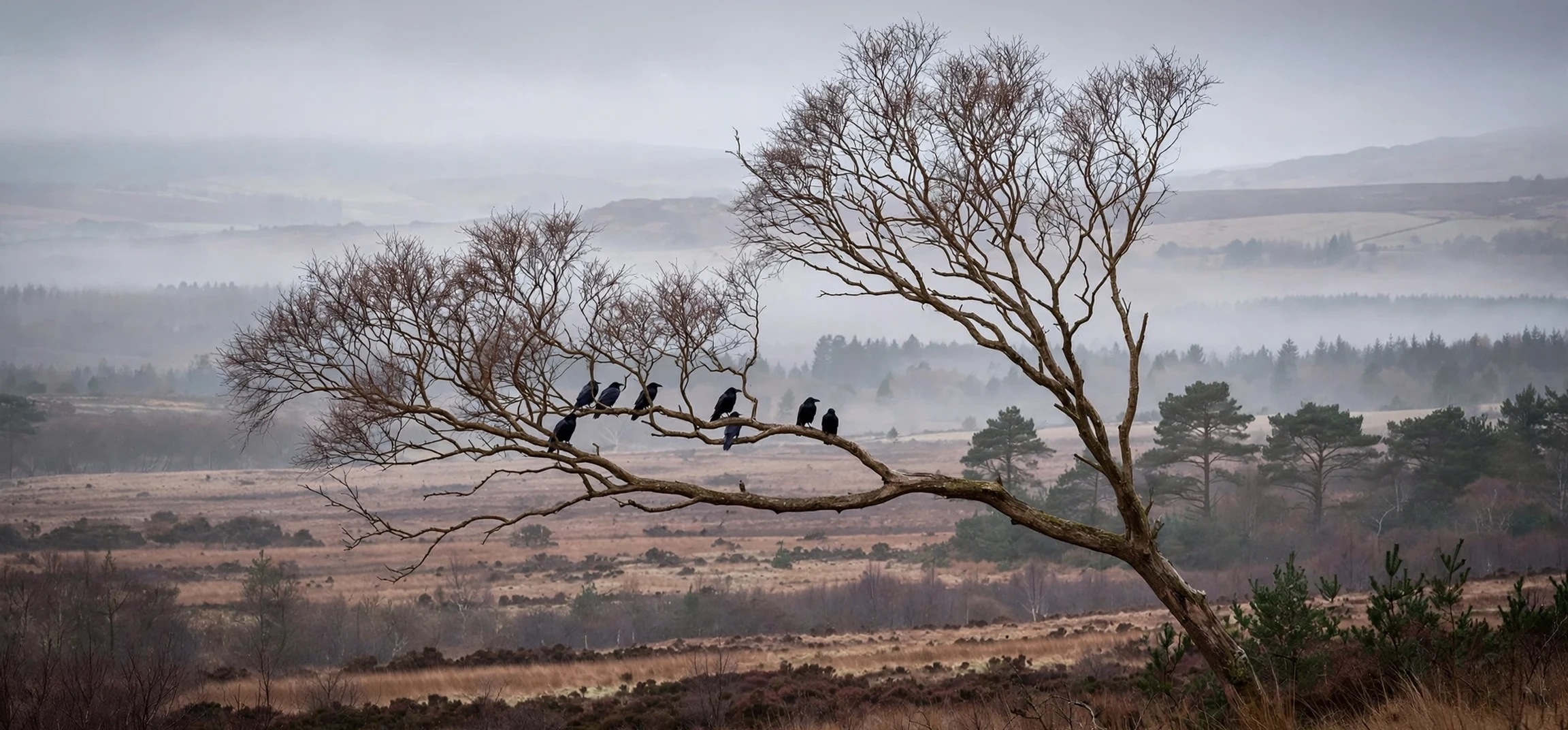
If you have ever watched a group of large black birds wheel across a winter sky and wondered what to call them, the answer to the name of a group of ravens is one of the most striking terms in English. The best-known name of a group of ravens is an unkindness, a wonderfully gloomy collective noun that fits the raven’s reputation in folklore, literature, and myth. But that is not the whole story. The name of a group of ravens can also be a conspiracy, and in older or more playful usage, a treachery. This guide explains where the name of a group of ravens comes from, when to use each term, and why English has such vivid names for animal groups in the first place.
Collective nouns for animals are often called terms of venery, a tradition that goes back to medieval hunting language, when naming a group precisely was part of the sport and the social code of the hunt. Some of those terms were practical, some were poetic, and some were jokes that stuck. The name of a group of ravens belongs firmly in the poetic and slightly dark category. Ravens have long been linked with battlefields, towers, prophecy, and mystery, so it is no surprise that the name of a group of ravens sounds dramatic. Understanding that history makes the term easier to remember and more fun to use correctly.
What Is the Name of a Group of Ravens?
The most widely accepted name of a group of ravens is an unkindness of ravens. You will find this term in dictionaries, trivia collections, and nature guides, and it is the answer most quiz setters expect. An unkindness captures the raven’s harsh call, its dark plumage, and its long association with ill omen in stories. When people ask for the name of a group of ravens, an unkindness is the safe, standard, and memorable answer to give.
However, a second term is also in circulation: a conspiracy of ravens. A conspiracy suits ravens well, because these birds are intelligent, social, and watchful, and they often gather, call to one another, and seem to be plotting something just out of human understanding. Some sources list a conspiracy as an alternative name of a group of ravens, while others treat it as a more modern or literary variant. Either way, if you use a conspiracy, most readers will understand you, but if you want the classic answer, choose an unkindness.
Unkindness, Conspiracy, or Treachery?
A third, rarer term sometimes appears: a treachery of ravens. Treachery echoes the same dark folklore as unkindness, and it appears in some lists of collective nouns, but it is far less common in dictionaries. For clear writing, it helps to know the hierarchy. The primary name of a group of ravens is an unkindness. A conspiracy is a recognised alternative. A treachery is a rare curiosity worth mentioning in trivia, but not the term to use if you want to be understood at once. When in doubt, use an unkindness, and mention a conspiracy as a colourful alternative.
Why Is the Name of a Group of Ravens So Dark?
The darkness of the name of a group of ravens is no accident. Ravens feed as scavengers, appear in stories about battlefields and graveyards, and have a deep, croaking call that sounds ominous to human ears. In Norse myth, ravens accompanied a chief god as watchers and messengers. In later European folklore, they were linked with prophecy and death. In famous poetry, a single raven became a symbol of grief and memory that would not leave. All of that cultural weight feeds into the name of a group of ravens, turning a simple collective noun into a small piece of storytelling.
It is also worth remembering that collective nouns were often invented for effect, not for science. Medieval writers enjoyed clever, alliterative, or moralising names for groups, and many of those names survived because they were fun to say and easy to remember. The name of a group of ravens survived because it is vivid, because ravens really do gather in social groups, and because the word unkindness is surprising enough to stick in the memory. That combination of sound, story, and truth is why the term is still quoted today.
Ravens in Groups in the Wild
In real life, ravens are usually seen alone or in pairs when they are breeding, but younger, non-breeding ravens often gather in larger social groups, especially around food. These gatherings can be noisy, playful, and highly social, with birds chasing, calling, and showing off aerial skill. So while the name of a group of ravens sounds grim, the birds themselves are often curious and sociable. Their intelligence is remarkable: ravens solve problems, use tools in some contexts, recognise individual birds and people, and play games in the air. A group of ravens is therefore less an omen and more a gathering of very clever neighbours.
Name of a Group of Ravens Compared With Other Birds
Part of the charm of the name of a group of ravens is how it compares with collective nouns for other birds. A group of crows is famously a murder, which shares the same dark tone. A group of geese on the ground is a gaggle, while in flight it is a skein. A group of owls is a parliament, a group of flamingos is a flamboyance, and a group of penguins on land is a waddle. Each term reflects something people noticed about the bird: its sound, its movement, its colour, or its reputation. The name of a group of ravens fits that pattern perfectly, reflecting reputation above all.
Comparing these terms also helps you remember them. If you know a murder of crows, you can remember an unkindness of ravens by the same logic: both are large, dark, intelligent birds with strong folklore reputations. If you enjoy collecting animal group names, you will find that many follow a similar logic, from a pride of lions to a school of fish. For more playful naming traditions, see our list of pup names from a popular animated series, which shows how names, whether for animals or characters, carry personality and story.
| Bird | Collective Noun | Why It Fits |
|---|---|---|
| Ravens | An unkindness | Dark folklore and harsh call |
| Ravens (alternative) | A conspiracy | Watchful, social, plotting impression |
| Crows | A murder | Dark reputation, like ravens |
| Owls | A parliament | Wise, solemn appearance |
| Flamingos | A flamboyance | Bright colour and showy display |
| Geese (in flight) | A skein | Thread-like flight formation |
How to Use the Name of a Group of Ravens in Writing
Using the name of a group of ravens correctly is simple once you know the grammar. You write an unkindness of ravens, with of linking the collective noun to the birds, just as you would write a flock of sheep or a herd of cattle. The verb usually agrees with the collective noun in formal writing, but in everyday English, people often use a plural verb when the focus is on the individual birds. For example, an unkindness of ravens was gathered on the cliff is formal, while an unkindness of ravens were calling loudly is common in speech. Either is understood, but consistency matters in a single piece.
The name of a group of ravens works best in creative writing, trivia, nature writing, and teaching, where a vivid term adds colour. In a scientific report, a simpler term such as a group or a flock may be more appropriate, because the goal is precision rather than poetry. Knowing when to use the colourful term and when to use the plain term is part of good writing. In a story, an unkindness of ravens circling a tower sets a mood at once. In a field note, a group of twelve ravens at a carcass gives the exact information a reader needs. Both are correct; the context decides.
Examples in Sentences
Here are natural ways to use the term. An unkindness of ravens settled on the bare branches at dusk. We watched a conspiracy of ravens trade calls across the valley. The raven group name came up in the quiz, and everyone remembered an unkindness. Each example keeps the collective noun with of and ravens, which is the standard pattern. Avoid forcing the term into a sentence where a plain group would be clearer, and avoid inventing new collective nouns unless you are clearly joking, because readers may take them as facts.
Raven Group Names in Culture and Trivia
The raven group name appears regularly in quizzes, crosswords, children’s books, and nature documentaries, which is why it has become a piece of general knowledge rather than a specialist term. It also appears in fantasy and fiction, where writers borrow the dark tone for atmosphere. When a trivia question asks for the raven group name, the expected answer is almost always an unkindness, and that consistency across sources makes it a reliable fact to learn and share. If a question allows alternatives, a conspiracy is the next best answer, and mentioning both shows a deeper knowledge.
For readers who love the stories behind names, the broader tradition of naming is full of similar surprises, from legendary figures to modern characters. Our article on the names of four legendary riders explores another set of names where story and symbolism matter as much as the label itself. The raven group name belongs in that same tradition: a label that tells you how people felt about the creature, not just what the creature is.
Frequently Asked Questions About Raven Group Names
What is the raven group name?
The standard raven group name is an unkindness of ravens. A conspiracy of ravens is a recognised alternative, and a treachery of ravens appears rarely in some lists.
Is it also correct to say a flock of ravens?
Yes. A flock is a general term for a group of birds and is always understood. An unkindness is the specific, traditional collective noun, while a flock is the plain, general alternative.
What is the difference between ravens and crows?
Ravens are larger, with a deeper call, a heavier bill, and a wedge-shaped tail in flight, while crows are smaller and more common in towns and farmland. Both are highly intelligent members of the same bird family, which is why their collective nouns share a dark tone.
Where does unkindness come from?
Unkindness comes from the medieval tradition of terms of venery, where groups of animals were given vivid, often moralising names. For ravens, the dark folklore around the bird made unkindness a natural and memorable choice.
Conclusion
The raven group name is an unkindness, with a conspiracy as a strong alternative and a treachery as a rare curiosity. That single term packs in centuries of folklore, a sense of the raven’s call and character, and the playful tradition of naming animal groups with imagination. Whether you need the answer for a quiz, a story, a lesson, or simple curiosity, an unkindness is the term to remember. For another charming example of how a name can carry a whole character, see our piece on the name of a famous wonderland cat. Next time you see dark wings against the sky, you will know exactly what to call the gathering: an unkindness of ravens.