If you have ever wondered about the common name of giraffe, the answer is delightfully simple: the common name is “giraffe” itself. The common name of giraffe refers to the everyday name used by ordinary people, as opposed to the scientific name used by biologists. In this guide, we explain the common name of giraffe, its scientific name, where the word comes from, and everything you need to know about the world’s tallest land animal, from its species and subspecies to its habitat, diet, behaviour, and conservation.
Common Name of Giraffe Explained
In biology, every species has two kinds of names. The common name is the name people use in everyday language, while the scientific name is a formal Latin-style name used by scientists worldwide. The common name of giraffe is simply “giraffe”, the tall, long-necked, spotted mammal native to Africa. When a textbook, a quiz, or an exam asks for the common name of giraffe, “giraffe” is the expected answer.
This can feel like a trick question, because the answer seems too obvious. But the distinction matters. Common names vary by language and region: in French, the animal is called “girafe”, in Spanish “jirafa”, and in Swahili “twiga”. Scientific names, by contrast, stay the same in every country, which is why scientists use them when precision matters. The common name of giraffe tells you what ordinary speakers call the animal, while the scientific name tells researchers exactly which species they mean.
Young giraffes also have their own common terms. A baby giraffe is called a calf, just like a baby cow or elephant. An adult male is called a bull, and an adult female is called a cow. A group of giraffes is called a tower, which is a wonderfully fitting name for the tallest animals on land. These everyday terms are all part of the common vocabulary around giraffes.
Common Name of Giraffe and Scientific Name
The scientific name of the giraffe is Giraffa camelopardalis. This name has an interesting history. The first part, Giraffa, is the genus name and comes from the Arabic word “zarafa”, meaning “fast walker”. The second part, camelopardalis, comes from ancient Greek and Roman ideas about the animal: early observers thought it looked like a mix of a camel and a leopard, because of its long neck and spotted coat. The name literally reflects that old “camel-leopard” description.
Modern research has complicated the picture. Scientists now recognise that what was once treated as a single species may actually be several distinct species, including the northern giraffe, the southern giraffe, the Masai giraffe, and the reticulated giraffe. Each has its own scientific name and slightly different coat patterns and ranges. For general purposes, though, Giraffa camelopardalis remains the classic scientific name taught in schools, and “giraffe” remains the common name of giraffe for all of them.
Understanding the difference between common and scientific names helps in exams and in general knowledge. If a question asks for the common name, answer with the everyday word. If it asks for the scientific name, give the Latin-style binomial. Mixing the two up is one of the most common mistakes in biology quizzes, and knowing the distinction puts you ahead.
Where the Word Giraffe Comes From
The English word “giraffe” travelled a long way to reach us. It comes from the French “girafe”, which came from the Italian “giraffa”, which came from the Arabic “zarafa”. That Arabic word may itself have come from an even older African language. The journey of the word mirrors the journey of knowledge about the animal, which reached Europe gradually through trade, travel, and exploration.
Ancient Romans called the animal “camelopardalis”, the camel-leopard, and that name stuck in scientific use even after the common name changed. In medieval Europe, giraffes were rare and exotic gifts between rulers, and seeing one was a once-in-a-lifetime event. The famous giraffe given to Lorenzo de Medici in Florence in the 1400s became a sensation, painted and celebrated across the city. Today, giraffes are familiar from zoos, documentaries, and safari photographs, but they still carry that sense of wonder.
The word history also explains why the common name of giraffe is so consistent across European languages. French “girafe”, Italian “giraffa”, and English “giraffe” all share the same root, so speakers of different languages can usually recognise the word. That shared root is a small reminder of how connected human languages and histories really are.
Giraffe Species and Subspecies
Giraffes live across Africa, from the savannas of East Africa to the woodlands of the south. The table below summarises the main groups recognised by modern research, along with their distinguishing features.
| Group | Where It Lives | Coat Pattern |
|---|---|---|
| Masai giraffe | Kenya and Tanzania | Jagged, vine-leaf shaped spots |
| Reticulated giraffe | Northern Kenya, Somalia, Ethiopia | Sharp, polygonal patches with bright white lines |
| Southern giraffe | South Africa, Namibia, Botswana, Zimbabwe | Rounded, blotchy spots on a tawny background |
| Northern giraffe | Central and West Africa | Large, rectangular patches, paler legs |
Each giraffe’s coat pattern is unique, like a human fingerprint. No two giraffes have exactly the same arrangement of spots, which helps researchers identify individuals in the wild. Calves inherit a pattern similar to their mothers, but the exact shapes and edges are always their own. This uniqueness is one of the many details that make giraffes fascinating to study.
Giraffes are the tallest land animals on Earth. Adult males can reach around 5.5 metres tall, with females slightly shorter. Their necks alone can be nearly 2 metres long, yet they contain only seven vertebrae, the same number as a human neck. Each vertebra is simply much larger. Their long legs let them run at surprising speeds, up to around 60 kilometres per hour over short distances, despite their graceful, loping gait.
Common Name of Giraffe Habitat and Diet
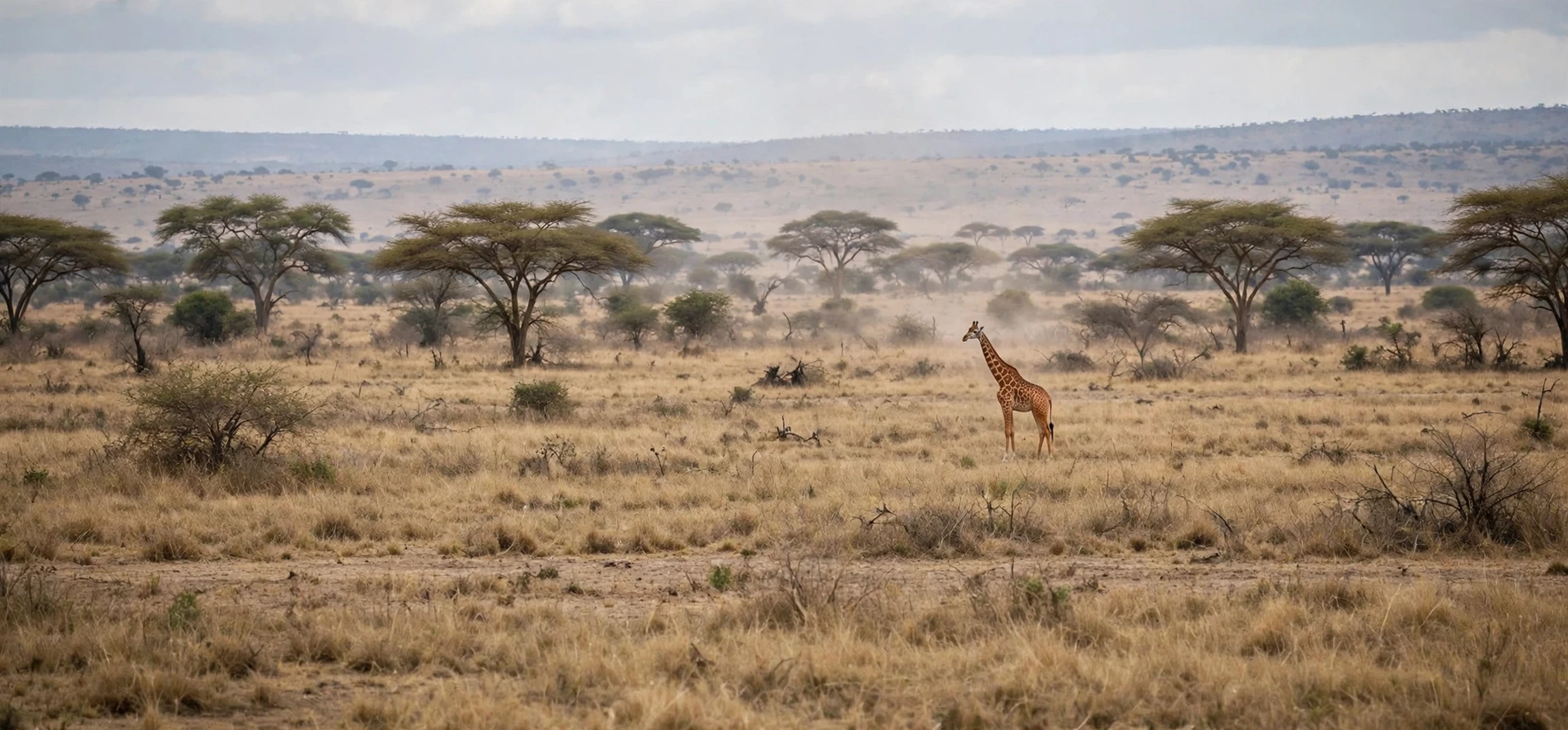
Giraffes live in savannas, grasslands, and open woodlands where acacia trees and other tall shrubs grow. Their height is a huge advantage: they can reach leaves that no other land animal can touch, giving them access to food that competitors cannot reach. This feeding niche reduces competition and helps explain why giraffes evolved such extraordinary necks.
The giraffe diet consists mainly of leaves, buds, flowers, and fruits, with acacia leaves a particular favourite. An adult giraffe can eat tens of kilograms of foliage each day, spending much of its time browsing. Their long, dark, prehensile tongues, which can reach around 45 centimetres, help them strip leaves from thorny branches without injury. Their thick, sticky saliva also protects their mouths from thorns.
Giraffes need relatively little water compared with many large mammals, because they get much of their moisture from the leaves they eat. They can go days without drinking, though when they do drink, they must spread their front legs wide and bend down awkwardly, a vulnerable position that makes them cautious at waterholes. This famous drinking posture is one of the most photographed behaviours in the animal kingdom.
Socially, giraffes are gentle and loosely organised. Females and calves often gather in groups, while adult males may roam alone or in small bachelor groups. Males compete for dominance through “necking”, a behaviour in which they swing their necks and heads at each other. These contests look dramatic but rarely cause serious injury, and they establish a hierarchy without the deadly fights seen in some other species.
Common Name of Giraffe Behaviour and Reproduction
Giraffe behaviour is calm and observant. They spend their days browsing, resting, and watching their surroundings, using their height to spot predators from far away. Their excellent eyesight, combined with their vantage point, makes them valuable sentinels for other savanna animals, which often pay attention when giraffes become alert. Zebras and antelopes grazing nearby benefit from the giraffe’s early warning system.
Giraffe calves are born after a gestation of about 15 months, dropping nearly two metres to the ground at birth. Within an hour, a calf can usually stand, and within a day it can run with its mother. This rapid development is essential on the open savanna, where predators are always a threat. Mothers are fiercely protective, and calves stay close to their mothers for well over a year.
Giraffes communicate with sounds that humans often cannot hear. They produce low-frequency hums, especially at night, which may help them stay in contact across distances. They also use body language, ear movements, and tail flicks to signal mood and intention. Researchers are still learning about giraffe communication, and new discoveries continue to surprise even experienced wildlife biologists.
For readers curious about names and meanings in general, this site offers related explainers such as the meaning of tigers in dreams, the meaning of the name Carol, and the meaning of the name Elena.
Giraffe Conservation Status
Despite their familiarity, giraffes face serious threats in the wild. Habitat loss, as savannas are converted to farms and settlements, fragments their ranges and cuts off migration routes. Poaching and human-wildlife conflict add further pressure. Some giraffe populations have declined sharply, and conservationists now describe giraffes as undergoing a “silent extinction”, because their decline has received less attention than that of elephants or rhinos.
Conservation efforts focus on protecting habitat, establishing wildlife corridors, and working with local communities. Zoos and breeding programmes also play a role, maintaining healthy populations and raising public awareness. Ecotourism helps too: when local people benefit from giraffe tourism, they have a strong incentive to protect the animals and their habitat.
Ordinary people can help by supporting reputable conservation organisations, choosing responsible safari operators, and spreading awareness that giraffes need protection. The common name of giraffe may be simple, but the conservation story is urgent, and every bit of attention helps ensure that future generations can still see these extraordinary animals in the wild.
Frequently Asked Questions
What is the common name of giraffe?
The common name of giraffe is “giraffe”. It is the everyday name used by ordinary speakers, as opposed to the scientific name Giraffa camelopardalis used by biologists.
What is the scientific name of giraffe?
The classic scientific name is Giraffa camelopardalis, meaning “camel-leopard” in reference to its long neck and spotted coat. Modern research recognises several distinct giraffe species, each with its own scientific name.
What is a baby giraffe called?
A baby giraffe is called a calf. An adult male is called a bull, an adult female is called a cow, and a group of giraffes is called a tower.
How tall is a giraffe?
Adult male giraffes can reach around 5.5 metres tall, making them the tallest land animals on Earth. Females are slightly shorter, and even newborn calves stand around 1.8 metres tall.
Conclusion
The common name of giraffe is “giraffe”, a simple everyday word with a long and fascinating history stretching from Arabic through Italian and French into English. Behind that simple name sits an extraordinary animal: the tallest land mammal, a gentle browser of acacia trees, a creature with a unique coat pattern, a two-metre neck built from just seven vertebrae, and a social life full of quiet communication. Knowing the difference between the common name and the scientific name, Giraffa camelopardalis, is useful for exams and general knowledge, but appreciating the animal itself matters more. Giraffes remind us that the natural world still holds wonders worth protecting, and that even the simplest name can open the door to a remarkable story.