If you have ever stood on a windy beach and wondered what the birds wheeling overhead are called, this guide to seabirds names is for you. Seabirds are birds that spend most of their lives at sea, coming to land mainly to breed, and learning their names is the fastest way to start identifying them with confidence. Whether you are a beginner birdwatcher, a student working on a nature project, or simply curious about the creatures you saw on a coastal walk, knowing common seabirds names turns a confusing crowd of white and grey wings into familiar characters with distinct habits, calls, and homes.
This guide explains the most common seabirds names in plain language, grouped by family so you can see how related birds fit together. You will learn how gulls differ from terns, why puffins and guillemots belong to the same family, and which birds truly live far out at sea versus those that hug the shore. Along the way you will find identification clues, habitat notes, and a quick reference table you can use on your next trip to the coast. By the end, you should be able to name many of the birds you meet and understand what their names tell you about how they live.
One thing to keep in mind is that common names vary by region. The same bird may be called a murre in North America and a guillemot in Britain, and some gulls have different names on different continents. This guide uses the most widely recognised common seabirds names and notes the main alternatives where they matter, so you are not caught out by a field guide or a local birder using a different word for the same bird.
Seabirds Names: The Main Groups Explained
The world of seabirds names becomes much easier once you learn the big groups. Scientists divide seabirds into families, and each family shares a way of life. Gulls, terns, and skimmers belong to one large family, while auks such as puffins and guillemots form another. Albatrosses, shearwaters, and petrels are tube-nosed birds, named for the small tubes on their bills that help them smell food and cope with salty water. Cormorants and gannets dive for fish, frigatebirds and boobies patrol warm tropical seas, and penguins, though flightless, are fully seabirds that swim rather than fly.
Learning groups first helps because birds in the same group often look and behave alike. If you can tell a gull from a tern, you have already narrowed down dozens of possible seabirds names to a handful. Gulls are sturdy, broad-winged birds with strong bills, often seen scavenging along shores and in car parks near the sea. Terns are slimmer and more graceful, with forked tails and pointed bills, and they dive neatly into the water for small fish. Skimmers are rarer and unmistakable, with a lower bill longer than the upper one, which they drag through the water as they fly.
Auks are the northern seabirds that many people love most. Puffins, with their bright bills in breeding season, nest in burrows on grassy islands and dive underwater using their wings to chase small fish. Guillemots and razorbills are their darker, slimmer relatives, often packed onto narrow cliff ledges in noisy colonies. Murres are the North American name for common guillemots, so if you read an American guide, remember that the two seabirds names describe the same bird. Little auks, also called dovekies, are tiny, starling-sized seabirds that gather in huge flocks in the far north.
Common Seabirds Names for Coastal Birds
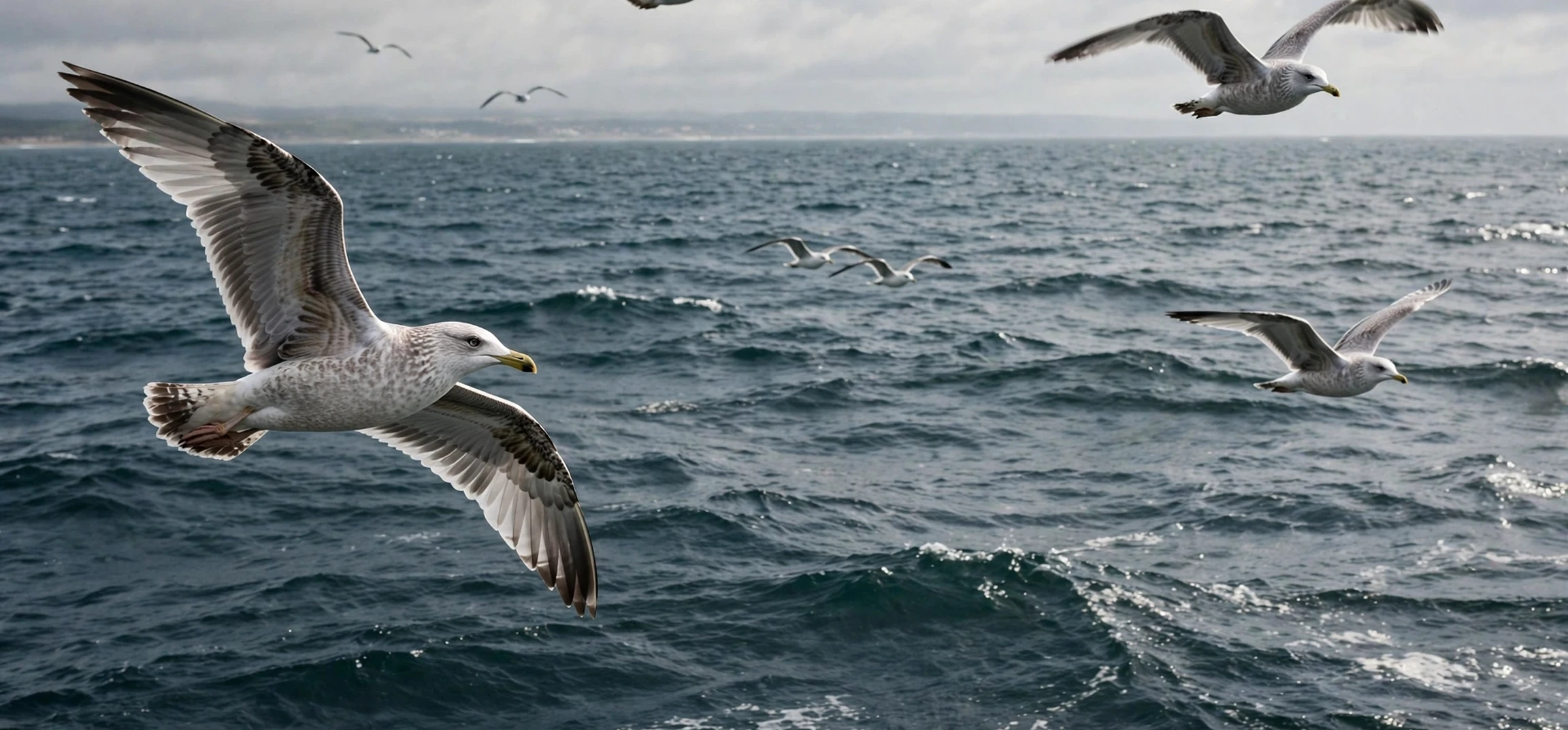
Most people meet seabirds near the shore, so coastal seabirds names are the most useful to learn first. The herring gull is the classic large gull of northern coasts, with a pale grey back, white head, and yellow bill marked with a red spot. The black-headed gull is smaller and, despite its name, wears a dark chocolate hood only in summer; in winter its head is mostly white with a dark ear spot. The lesser black-backed gull and great black-backed gull are darker-backed relatives, the latter being the largest gull in the world and a powerful predator as well as a scavenger.
Among terns, the common tern and Arctic tern are slender, elegant birds with black caps and red bills. The Arctic tern is famous for its migration, travelling from Arctic breeding grounds to Antarctic seas and back each year, one of the longest journeys of any animal. Sandwich terns carry a black bill with a yellow tip and a shaggy black crest, while little terns are the smallest terns, hovering delicately before plunging for tiny fish and shrimps near sandy beaches. Learning these coastal seabirds names gives you a solid base, because these are the birds you are most likely to see on piers, estuaries, and holiday beaches.
Cormorants and shags are also common coastal birds, often seen standing on rocks with wings spread out to dry. The great cormorant is large and dark with a white throat patch, while the European shag is smaller, slimmer, and greener-glossed, with a crest in breeding season. Both dive deeply for fish and use their feet to steer underwater. Gannets are larger and more spectacular, bright white with black wingtips and a golden head, plunging from great heights into the sea in a spectacular dive. Oystercatchers, though waders rather than true seabirds, are often listed alongside coastal seabirds names because they share the same shores, with black-and-white plumage and a long orange-red bill.
Seabirds Names for Open-Ocean Wanderers
Some of the most remarkable seabirds names belong to birds that spend years at sea without touching land. Albatrosses are the masters of this life, with wingspans reaching over three metres in the wandering albatross, the largest of all flying birds. They glide for hours on ocean winds without flapping, sleeping on the wing and following ships for scraps. Black-browed albatrosses, named for the dark line above the eye, are among the most commonly seen albatrosses in southern oceans, while Laysan and black-footed albatrosses breed on remote Pacific islands.
Shearwaters and petrels are smaller tube-nosed wanderers. Manx shearwaters breed in burrows on islands off western Britain and migrate to South America, while sooty shearwaters make a vast looping journey around the Pacific. Storm petrels are tiny, swallow-like birds that patter across waves, seeming to walk on water, which gave rise to their old name of Mother Carey’s chickens. Fulmars look like gulls but are actually petrel relatives, stiff-winged gliders that nest on cliffs and spit foul-smelling oil at intruders. Knowing these open-ocean seabirds names helps you make sense of wildlife documentaries and pelagic boat trips, where these birds may appear far from any shore.
In warm tropical seas, the cast changes again. Frigatebirds are large, dark birds with deeply forked tails and huge wingspans, famous for the red throat pouch males inflate during courtship displays. They rarely land on water and often steal fish from other birds in flight. Boobies, including the blue-footed booby and masked booby, are gannet relatives that dive for fish in tropical waters. Tropicbirds, with long white tail streamers and elegant flight, are sometimes called bosun birds by sailors. Red-billed and white-tailed tropicbirds are the best known of these tropical seabirds names, and they bring a splash of exotic beauty to island coasts.
Seabirds Names and Identification Tips
Once you know the main seabirds names, identification becomes a matter of looking for a few key clues. Start with size and shape: is the bird large and heavy like a gannet or gull, slim and forked-tailed like a tern, or small and fluttering like a storm petrel? Next, look at the bill. Gulls have stout, hooked bills, terns have slim pointed bills, puffins have deep triangular bills, and cormorants have hooked bills for gripping fish. Bill colour and markings, such as the red spot on a herring gull or the yellow tip on a Sandwich tern, are often the quickest giveaway.
Plumage patterns matter too, but beware of seasonal changes. Many seabirds look different in breeding and non-breeding plumage, and young birds can look quite different from adults. Juvenile gulls, for example, are mottled brown and take several years to reach clean adult grey-and-white plumage. Puffins lose the bright colours of their bills in winter and look much plainer. A good habit is to note the time of year, the location, and the bird’s behaviour alongside its appearance, since behaviour is often more reliable than colour alone. A bird plunging from height is likely a gannet or booby, a bird pattering on waves is likely a storm petrel, and a bird sitting upright on a cliff ledge in a dense crowd is likely a guillemot.
Sound is another useful clue. Kittiwakes, small cliff-nesting gulls, call their own name in a repeated kitti-wake cry, which makes them one of the easiest seabirds names to learn by ear. Fulmars make low chuckling calls at their nest sites, shearwaters return to island colonies at night with eerie wailing cries, and puffins growl softly in their burrows. If you can, listen to recordings before a coastal visit so the sounds feel familiar when you hear them in the wild. A notebook or phone note of what you saw, where, and when will also help you compare with guides later and build your knowledge trip by trip.
Seabirds Names by Habitat: Coast, Cliff, and Open Sea
Habitat is a powerful shortcut for narrowing down seabirds names. Sandy beaches and estuaries host gulls, terns, and skimmers, which need open ground for nesting and shallow water for feeding. Rocky cliffs host guillemots, razorbills, kittiwakes, fulmars, and shags, which nest on ledges safe from most land predators. Grassy islands with soft soil host puffins and shearwaters, which dig burrows or use old rabbit holes. Harbours and piers attract herring gulls and cormorants, which have learned to profit from human activity and fishing boats.
Further out, the open sea belongs to albatrosses, petrels, and shearwaters, which follow currents, winds, and shoals of fish. Tropical islands host frigatebirds, boobies, and tropicbirds, while icy southern and northern seas host penguins and little auks. Penguins deserve a special mention among seabirds names because people sometimes forget they are birds at all. Emperor penguins breed on Antarctic ice, king penguins gather in huge colonies on sub-Antarctic islands, and African penguins, also called jackass penguins for their donkey-like bray, live on southern African coasts. Galapagos penguins are the only penguins found near the equator, a reminder of how widely seabirds have adapted.
For more name guides in the same spirit, see our list of ocean names and our collection of animal name ideas, which show how grouping names by theme makes them easier to remember. Returning to seabirds, remember that protecting their habitats matters as much as naming them. Many seabirds face threats from plastic pollution, overfishing, invasive predators on breeding islands, and climate change shifting their food supplies. Learning seabirds names is a first step toward caring about these birds and supporting the reserves and island sanctuaries where they breed.
Seabirds Names Quick Reference Table
The table below gathers ten of the most useful seabirds names with their group, typical habitat, and a single standout clue. Use it as a pocket checklist on your next coastal walk.
| Seabird | Group | Typical habitat | Standout clue |
|---|---|---|---|
| Herring gull | Gull | Coasts and harbours | Yellow bill with red spot |
| Arctic tern | Tern | Coasts and open sea | Longest migration of any bird |
| Atlantic puffin | Auk | Grassy islands and cliffs | Bright triangular bill in summer |
| Common guillemot | Auk | Cliff ledges | Upright, penguin-like stance |
| Northern gannet | Gannet | Cliffs and open sea | Spectacular high plunge dives |
| Great cormorant | Cormorant | Coasts and estuaries | Stands with wings spread to dry |
| Wandering albatross | Albatross | Southern oceans | Huge wingspan, glides for hours |
| Manx shearwater | Shearwater | Islands and open sea | Night-time calls at colonies |
| Great frigatebird | Frigatebird | Tropical seas | Male inflates red throat pouch |
| Emperor penguin | Penguin | Antarctic ice | Largest penguin, flightless swimmer |
Seabirds Names: Frequently Asked Questions
What is the most common seabird name beginners learn first?
Most beginners learn gull names first, especially the herring gull, because gulls are large, common, and easy to spot on almost any coast. From there, terns and cormorants are natural next steps, since they share the same shores but look clearly different.
Are penguins really seabirds?
Yes. Penguins spend most of their lives at sea, feed on fish, krill, and squid, and come ashore mainly to breed and moult. They are flightless, but they fly underwater with their wings, which makes them fully part of the seabird family in every ecological sense.
Why do some seabirds have two different names?
Common seabirds names vary by region and tradition. The common guillemot is called a murre in North America, the little auk is called a dovekie there too, and some gulls and terns have different local names. Scientific names stay the same worldwide, which is why guides often print both.
How can I remember seabirds names more easily?
Learn birds in groups rather than one by one, use the quick reference table above, and practise on real visits. Noting size, bill shape, and behaviour for each sighting builds memory far faster than reading lists alone, and revisiting the same coast through the seasons shows you how plumage and numbers change.
Conclusion: Learning Seabirds Names
Learning seabirds names opens up the coast in a new way. What once looked like a crowd of identical white birds becomes a cast of gulls, terns, puffins, gannets, shearwaters, and albatrosses, each with its own way of flying, feeding, and raising chicks. Start with the coastal birds you see most often, add the cliff and island species on special trips, and keep the open-ocean wanderers as a goal for boat trips and documentaries. With groups, clues, and a little practice, the names will stick, and every walk by the sea will feel richer for knowing who is sharing the shore with you.